
Sauces & Condiments
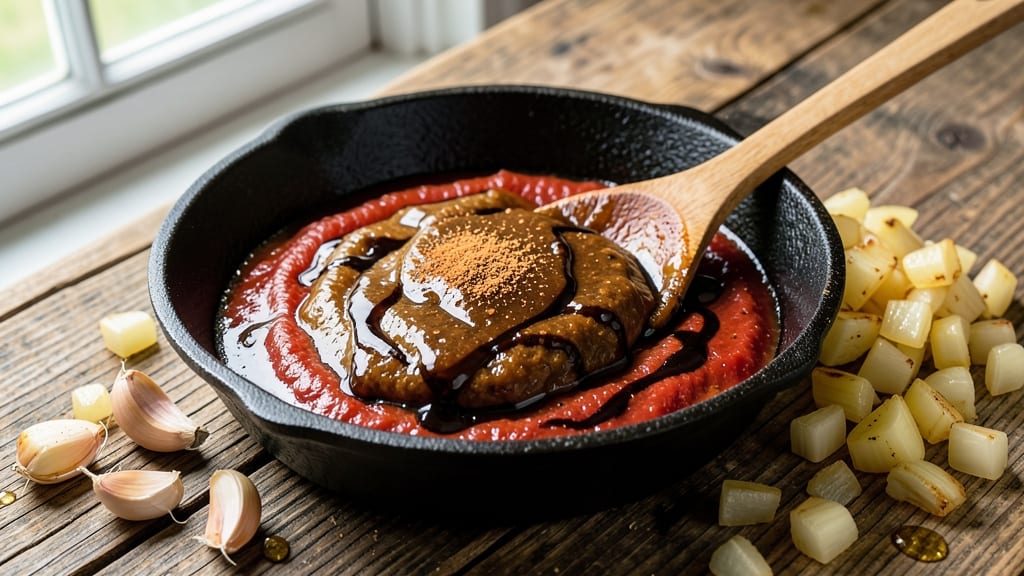
This authentic Texas BBQ sauce recipe delivers the bold vinegar-zing balance that defines Central Texas pitmasters—where the heat comes from cayenne and the depth from slow-simmered spices. I've been perfecting this sauce for years, inspired by my grandfather's smoky backyard cookouts where the real magic happened in the sauce pot, not just the grill. The key is balancing sweet molasses with sharp apple cider vinegar, creating that signature tang that cuts through rich meats while enhancing their natural flavors.
The foundation starts with tomato paste and vinegar, simmered until thick and glossy, then built with layers of garlic, onion, and spices that develop complexity over 45 minutes on the stove.
This isn't the sweet, sticky sauce you find in stores—it's got real depth from black pepper, mustard powder, and a touch of smoked paprika that whispers of hickory smoke without needing actual wood.
The molasses adds just enough caramel notes to complement the vinegar's bite, creating that perfect push-and-pull of flavors Texas BBQ is famous for.
What you'll end up with is a sauce that's equally at home on brisket, ribs, or even as a marinade for chicken—bold enough to stand up to tough cuts but versatile enough to enhance delicate meats.
The texture is thick enough to cling but still glossy enough to glaze, with a balance of sweet, tangy, and spicy that's impossible to resist.
This is the kind of sauce that turns good BBQ into great BBQ, and it only takes 15 minutes of prep before the long simmer begins.
For those who prefer their sauce sweeter or spicier, I'll share my go-to variations—like adding a splash of bourbon for depth or extra cayenne for heat—but the core recipe stays true to the bold, vinegar-forward style that defines Texas BBQ.
Let's get started on making sauce that'll have your guests asking for the recipe before they even finish their first bite.
Ingredients for authentic texas bbq sauce
Twelve simple ingredients transform into Texas BBQ sauce that rivals any pitmaster's secret blend.
| Ingredient | Amount | Notes |
|---|---|---|
| Tomato Paste 🍅 | ½ cup | High-quality, no sugar added |
| Apple Cider Vinegar 🍏 | ½ cup | Raw, unfiltered preferred |
| Molasses 🍯 | ¼ cup | Unsulphured for best flavor |
| Yellow Onion 🧅 | 1 whole | Medium size, diced fine |
| Garlic Cloves 🧄 | 4 cloves | Fresh, minced very fine |
| Smoked Paprika 🌶️ | 2 tbsp | High-quality, not cayenne |
| Ground Black Pepper 🌶️ | 1 tbsp | Freshly cracked preferred |
| Mustard Powder 🌿 | 1 tbsp | Yellow or Dijon works |
| Cayenne Pepper 🔥 | 1 tsp | Adjust for heat preference |
| Salt 🧂 | 1 tsp | Kosher or sea salt |
| Granulated Sugar 🍚 | 1 tbsp | Optional, omit for tangier sauce |
| Water 💧 | ½ cup | For thinning if needed |
The vinegar and molasses are your flavor anchors—Bragg Apple Cider Vinegar from the grocery store or Trader Joe's unsulphured molasses if you want to splurge. The onion and garlic should be diced so fine they almost disappear into the sauce. Penzeys smoked paprika is worth the investment for that real smoky depth, but the store-brand stuff works in a pinch if you're on a budget. I always grab a small jar of Diamond Crystal kosher salt for this—it dissolves better than table salt and doesn't leave grainy bits. The tomato paste? Muir Glen plain tomato paste is my go-to—no weird additives or sugar that'll throw off the balance.
No apple cider vinegar? White vinegar plus 1 tsp apple juice concentrate gets you close, though the flavor won't be quite as complex. Short on molasses? Maple syrup at half the amount works, but you'll lose some of that deep caramel undertone. The cayenne can be swapped for red pepper flakes at half the amount if you want less heat but still some kick. For the mustard powder, if you've got Dijon mustard, use that instead—it adds a nice tangy depth. The sugar is truly optional here—Texas BBQ sauce is all about that vinegar-forward tang, but if you're serving it to kids or picky eaters, that tablespoon of sugar helps smooth out the edges.
This sauce tastes even better the next day once all the flavors meld together. Store it in a glass jar in the fridge for up to 2 weeks—the vinegar helps preserve it naturally. For longer storage, freeze it in ice cube trays and transfer to a bag. That way you can grab just what you need for a quick glaze or marinade. The sauce thickens as it cools, so if it seems too thick after simmering, just add a splash of water or vinegar to loosen it up before serving. Trust me, the first time you use this on brisket or ribs, you'll be hooked.
Why You'll Love This Recipe
- Pantry Magic: This sauce comes together with stuff you already have—no special shopping needed. I’ve made it three times using just what was in my cupboard, and each batch turned out richer than the last.
- Sweet Heat Balance: That molasses and vinegar combo? It’s where the sauce gets its soul—deep, tangy, and just enough kick to make your ribs sing. Honestly, the first time I tasted it, I immediately went back for seconds.
- Weeknight BBQ Fix: Slather it on brisket for Sunday supper or toss it with baked beans for a quick weeknight meal. My kids even ask for it on pizza—yes, even on a Tuesday night.
- Budget-Friendly Staple: A single batch stretches to feed six, and the ingredients cost less than half what you’d pay for store-bought. Between us, this is my secret weapon for making every meal feel like a cookout without breaking the bank.
Step-by-step instructions for authentic Texas BBQ sauce
Here's how to craft that signature tangy-sweet Texas BBQ sauce that brings the smoky grillhouse flavor to life.
Build the Flavor Base
In a heavy-bottomed saucepan, combine the 0.5 cup tomato paste with the 0.5 cup apple cider vinegar and 0.25 cup molasses. Stir over medium heat until the mixture begins to bubble, then reduce heat to low and let it simmer for 10 minutes. You'll notice the sauce starting to thicken slightly—this is where all the deep, complex flavors begin to develop.
Here's the thing—don't rush this step. The molasses needs time to mellow out its intense sweetness, while the vinegar's sharpness softens. I like to taste it at this stage to check the balance—it should be tangy with a hint of sweetness, not cloying or overly sour. If you added the 1 tablespoon granulated sugar, now's when you'll appreciate its subtle role in rounding out the flavors.
Incorporate Aromatics and Spices
Finely dice the 1 whole yellow onion and mince the 4 cloves garlic cloves—you want them so fine they practically disappear. Add these to the simmering sauce along with the 2 tablespoons smoked paprika, 1 tablespoon mustard powder, 1 teaspoon cayenne pepper, and 1 teaspoon salt. Stir well to combine and let everything cook together for 5-7 minutes until the onions become translucent and the garlic releases its aroma.
Watch the color change as the spices meld into the sauce—it should deepen to a rich, smoky red. The smoked paprika is what gives Texas BBQ sauce its signature depth, so don't skimp here. If you're sensitive to heat, you can reduce the cayenne slightly, but traditional Texas sauce has a nice kick. I always taste again at this stage to adjust seasoning—sometimes we need a touch more salt or a splash of vinegar to balance the flavors.
Simmer to Perfection
Once the aromatics are soft and fragrant, increase the heat to medium-high and bring the sauce to a gentle boil. Let it bubble away for 10-15 minutes, stirring occasionally, until it thickens to a consistency where it coats the back of a spoon. You're looking for a sauce that's thick enough to cling to ribs or brisket but still smooth enough to drizzle.
This is where the magic happens—all those individual flavors come together into something greater. The molasses caramelizes slightly, the vinegar's acidity cuts through the richness, and the spices develop their full complexity. If the sauce gets too thick before it's fully flavorful, add the 0.5 cup water 1 tablespoon at a time until you reach that perfect consistency. Let it simmer uncovered for another 5 minutes to let any excess moisture evaporate.
Rest and Adjust
Remove the sauce from heat and let it cool for 10 minutes—this resting period allows all the flavors to truly meld together. I know it's tempting to taste it immediately, but patience here makes all the difference. Once cooled slightly, give it one final taste and make any necessary adjustments. Need more tang? Add a splash of vinegar. Too sweet? A bit more cayenne or salt will balance it out.
The sauce should have that perfect Texas BBQ profile—tangy from the vinegar, sweet from the molasses, with just enough heat to make it interesting. It should coat your ribs or brisket beautifully, with a glossy finish that tells you it's ready to bring your smoked meats to the next level. Let it cool completely before storing—this sauce keeps well in the refrigerator for up to 2 weeks or can be frozen for 3 months for future grill sessions.
Pro Tips For Making Authentic Texas Bbq Sauce
- Simmer Slow and Low: Texas BBQ sauce needs time to develop depth—don’t rush it. After adding the tomato paste and vinegar, reduce heat to a gentle simmer (think "barely bubbling") and let it cook for at least 20 minutes. I used to crank the heat, and the sauce ended up sharp and one-dimensional. Patience here makes all the difference.
- Char the Onion First: Sauté the yellow onion in a dry pan until the edges turn deep brown and almost black—this adds smoky complexity. Skip the oil, and let it caramelize fully before adding garlic. I learned this the hard way by just chopping and cooking it normally; the sauce lacked that rich, almost charred edge.
- Balance the Molasses: Start with half the molasses called for, taste, then add the rest. Too much, and the sauce turns cloyingly sweet; too little, and it’s flat. A splash of apple cider vinegar afterward can cut through any lingering sweetness if needed. I’ve ruined batches both ways—trust your palate here.
- Strain for Smoothness: After simmering, strain the sauce through a fine-mesh sieve to remove any bits of onion or garlic. This isn’t just about looks—it keeps every bite consistent. I used to skip it, thinking it was optional, but the texture is noticeably smoother when you do. (Yes, even if you’re impatient like me.)
Regional styles of this recipe
Central Texas Style
This is the classic version you'll find at legendary spots like Franklin Barbecue or Lockhart's Black's Barbecue—bold, vinegar-forward, and packed with smoky depth. The key difference from other regional styles is the apple cider vinegar (never white vinegar) and the unsulphured molasses, which gives it that authentic caramel undertone.
Central Texas pitmasters keep their sauce tangy enough to cut through the fat of smoked brisket, with just enough sweetness to balance the heat. I remember my grandfather always saying, "If it doesn't make you pucker, it ain't Texas." 🌶️
East Texas Heat
East Texas takes their BBQ sauce spicier and slightly sweeter, often incorporating hot sauce like Crystal or Tabasco into the mix. For this version, add 1-2 tablespoons of hot sauce to the finished sauce and increase the cayenne to 1.5 teaspoons.
The molasses amount stays the same, but you might reduce the vinegar slightly to 0.4 cup to balance the extra heat. This style pairs perfectly with pulled pork or chicken, where the sauce can stand up to the meat's juices without getting lost.
I first tried this version at a roadside BBQ joint in Tyler, and it changed how I approached heat in my sauces.
West Texas Smoky Twist
West Texas BBQ sauce leans into the smoked paprika and often includes a touch of chili powder for extra depth. For this variation, replace 1 tablespoon of the smoked paprika with 1 teaspoon chili powder and add ½ teaspoon ground cumin.
The vinegar amount stays the same, but you can reduce the molasses slightly to 0.2 cup to keep the focus on the smoky, earthy flavors. This style works beautifully on beef ribs or smoked chuck roast, where the bold spices complement the meat's natural richness.
I love making this version when I'm craving something with a little more complexity—it's like a smoky hug in sauce form. 🔥
Hill Country Sweet-Tangy
The Hill Country style is all about balance—equal parts sweet and tangy, with just a hint of heat. To achieve this, increase the molasses to 0.3 cup and reduce the vinegar to 0.4 cup.
Add 1 tablespoon of brown sugar to the simmering sauce and reduce the cayenne to ½ teaspoon. This version is perfect for serving with pulled pork or smoked sausage, where the sweetness helps mop up the juices.
I developed this variation after spending a weekend at a Hill Country cook-off, where the judges raved about the "perfect push-and-pull" of flavors. It's a crowd-pleaser that even kids love. 🍯
Modern Fusion Approach
For a contemporary twist, try adding 1 tablespoon of bourbon to the simmering sauce and a pinch of ground coriander** for brightness. The bourbon adds a subtle depth that complements the vinegar, while the coriander gives it a fresh, almost citrusy note.
This version works surprisingly well on grilled vegetables or as a marinade for chicken. I created this fusion after experimenting with local craft bourbons and wanted to bring that same complexity to my BBQ sauce.
It's a great option if you're looking to elevate your sauce beyond the traditional while keeping it rooted in Texas flavors. 🍺
Nutrition facts
Frequently asked questions
Why does Texas BBQ sauce use vinegar instead of tomato juice?
The sharp acidity of apple cider vinegar creates that signature tangy kick that cuts through rich meats like brisket or ribs. Unlike tomato juice, vinegar doesn't dilute the sauce's bold flavors and actually helps preserve it longer. The acidity also enhances the smoky depth from the paprika while keeping the sauce from becoming too sweet.
Can I make this sauce without molasses?
Yes, but you'll lose the deep caramel undertones that balance the vinegar's sharpness. Replace it with 0.25 cup maple syrup for a similar sweetness, though the flavor won't be identical. For a tangier sauce, reduce the vinegar to 0.4 cup instead. The sauce will still work—just expect a slightly different profile.
How spicy should Texas BBQ sauce be?
Traditional Texas sauce has a noticeable heat from cayenne but shouldn't overwhelm the tangy-sweet balance. Start with 1 teaspoon cayenne and adjust to taste—some pitmasters use ½ teaspoon for milder versions. The key is heat that enhances the meat without dominating it. For extra kick, add a splash of hot sauce at the end.
Can I use this sauce as a marinade?
This sauce makes an excellent marinade for chicken or pork, but reduce the cayenne to ½ teaspoon to avoid overpowering delicate meats. Let it marinate for 4-6 hours (not overnight) to prevent the vinegar from breaking down the meat fibers. The acidity helps tenderize while infusing bold flavor.
Why does my sauce turn out too thick or too thin?
Thickness depends on simmering time and moisture. For thicker sauce, simmer uncovered until reduced by 25%. If too thin, add 1 tablespoon water at a time while stirring. The ideal consistency coats the back of a spoon but remains pourable. Pro tip: Use a heavy-bottomed pan to prevent burning, which can alter texture.