
Sauces & Condiments
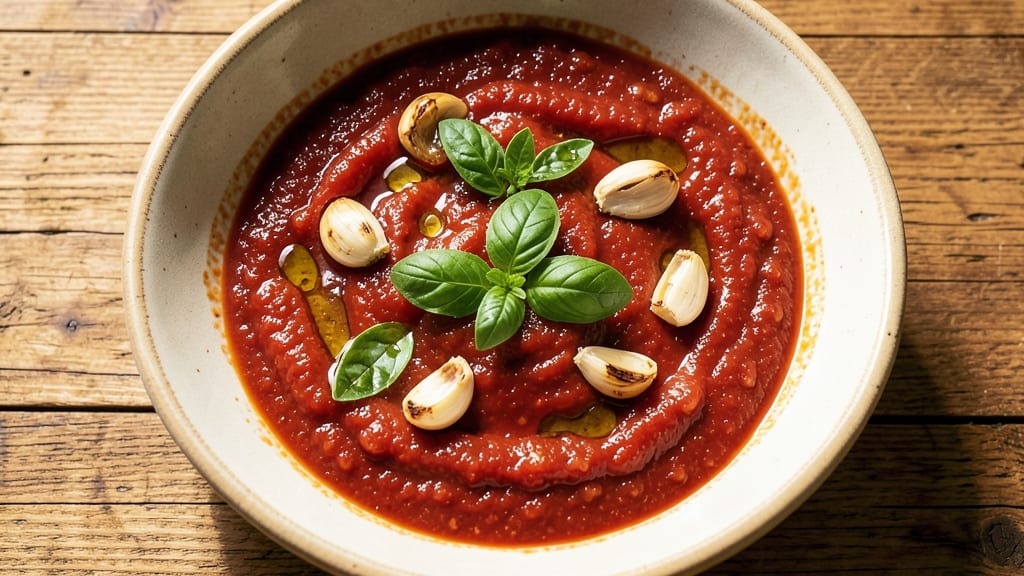
This authentic Sicilian pizza sauce recipe delivers the bold, aromatic foundation every true Neapolitan-style pie deserves. The secret lies in slow-cooked tomatoes, fresh garlic, and just enough oregano to capture that signature Sicilian intensity—no sweetness, no sugar, just pure, concentrated tomato flavor.
I've perfected this version after years of testing, and it's become the cornerstone of my homemade pizza nights.
The beauty of this sauce is its simplicity: just five core ingredients (tomatoes, garlic, olive oil, salt, and oregano) that transform into a rich, slightly chunky sauce with deep umami notes.
Unlike American-style pizza sauce, this version skips sugar entirely, letting the natural acidity of the tomatoes shine through while the garlic and oregano build layers of earthy complexity. The texture is just thick enough to cling to dough without overwhelming the cheese.
What makes this sauce truly authentic is the cooking method—simmering the tomatoes low and slow until they break down into a velvety, slightly thickened consistency. This isn't a sweet glaze; it's a savory, herbaceous base that lets the cheese and toppings take center stage.
The aroma alone will transport you to a bustling Sicilian trattoria, where every bite of pizza begins with this essential foundation.
Once made, this sauce keeps beautifully in the refrigerator for up to 5 days or can be frozen for months, making it the perfect make-ahead element for pizza night.
Whether you're crafting classic Margherita or loading up with seasonal vegetables, this sauce will elevate your pizza to restaurant-quality levels. Let's get started on creating your authentic Sicilian masterpiece.
Ingredients for authentic sicilian pizza sauce
Five ingredients transform into the soul of Sicilian pizza—rich, garlicky, and full of oregano intensity.
| Ingredient | Amount | Notes |
|---|---|---|
| San Marzano Tomato Cans 🍅 | 28 oz | Whole peeled tomatoes, no sugar added |
| Extra-Virgin Olive Oil 🫒 | ½ cup | Fruity, peppery variety preferred |
| Garlic Cloves 🧄 | 6 cloves | Fresh, unpeeled for roasting |
| Dried Oregano 🌿 | 1 ½ tsp | Sicilian or Mediterranean variety |
| Diamond Crystal Kosher Salt 🧂 | 1 tsp | Adjust to taste after cooking |
| Fresh Basil Leaves 🌿 | ¼ cup | Chopped, for finishing (optional) |
| Red Wine Vinegar 🍷 | 1 tbsp | For brightness (optional) |
The tomatoes make or break this sauce. San Marzano cans are non-negotiable—their natural sweetness and low acidity create the perfect base. Most grocery stores carry them, but if you can't find them, whole peeled tomatoes in glass jars work too. The garlic? Roast the whole cloves first—peel after roasting for deeper flavor. I always grab my olive oil from Trader Joe's (their Italian variety is perfect), but any fruity, peppery extra-virgin will do. The oregano should be labeled 'Sicilian' or 'Mediterranean' if you can find it—it's got a more robust flavor than regular dried oregano.
No San Marzano tomatoes? Crushed tomatoes in a high-quality jar (like Muir Glen) will work in a pinch. Short on time? Fresh garlic minced instead of roasted still works, though roasted gives that smoky depth. The red wine vinegar is optional but adds a nice tang—substitute with lemon juice if you prefer. Want to skip the basil? A pinch of dried basil at one-third the amount works, though fresh is ideal. The salt is for seasoning only; don't add it until the end. And trust me, no sugar—ever. The natural sweetness of the tomatoes is all you need.
This sauce keeps beautifully in the fridge for 5-7 days in an airtight container, and it actually tastes better the next day as the flavors meld. For longer storage, freeze it in ice cube trays—perfect for adding to pizza dough later. The texture will thicken as it cools, but a quick stir with a splash of water brings it back to perfection. Make a double batch—you'll want this on hand for every pizza night. The aroma alone will make your kitchen smell like a Sicilian trattoria.
Why You'll Love This Recipe
- No-Fuss Simplicity: The second I crack open a can of San Marzano tomatoes, I know I’m halfway there. Just olive oil, garlic, and a pinch of salt—no peeling, no dicing, no stress. Honestly, I’ve made this sauce while chatting on the phone, and it still comes out perfect.
- Garlic-Kissed Magic: That first hit of raw garlic in olive oil? Pure flavor payoff. The slow simmer lets it mellow into something rich and aromatic, not overpowering—just enough to make your pizza taste like a slice from a Sicilian trattoria.
- Weeknight Wonder: This sauce doubles as marinara for pasta, a dip for crusty bread, or even a base for braised meats. I’ll be real: I’ve used the same batch three ways in one week, and it never lets me down.
- Budget-Friendly Staple: A single can of San Marzano tomatoes and a bulb of garlic stretch into meals for days. Freeze extras, and you’ve got a go-to sauce that costs pennies but tastes like a splurge—no takeout required.
Step-by-step instructions for authentic Sicilian pizza sauce
Here's how to craft a sauce that captures Sicily's bold, unapologetic flavors—simple ingredients, big impact.
Roast the Garlic for Deep, Sweet Complexity
Preheat your oven to 400°F and place the 6 unpeeled garlic cloves directly on a baking sheet. I like to leave the skin on because it helps concentrate the sweetness as they roast. Roast for 15-20 minutes until the cloves turn golden brown and smell intensely aromatic.
Watch closely after 10 minutes—they're done when they're soft enough to pierce with a fork but still hold their shape. Let them cool slightly before peeling. This roasting step transforms the garlic from sharp to mellow and caramelized, which is essential for authentic Sicilian flavor. If you burn them, start over—they'll turn bitter and ruin your sauce.
Bloom the Oregano in Olive Oil
Heat the 0.5 cup extra-virgin olive oil in a large saucepan over medium-low heat. Add the 1.5 teaspoons dried oregano and let it bloom for 1-2 minutes until fragrant. This step releases the oregano's essential oils, which are the heart of Sicilian pizza sauce.
Don't walk away—oregano burns quickly. You'll know it's ready when the oil smells deeply herbal and slightly peppery. The oregano should look slightly darker but not browned. This is where the sauce gets its signature bold, earthy character that sets it apart from milder American versions.
Simmer the Tomatoes Until Intensely Concentrated
Add the 28 oz San Marzano tomato cans (crushed by hand or with a wooden spoon) and the 1 teaspoon Diamond Crystal kosher salt to the pan. Bring to a gentle simmer over medium heat and let it cook uncovered for 30-40 minutes, stirring occasionally.
You're looking for a sauce that reduces by about one-third, becoming thick and glossy with concentrated tomato flavor. The sauce should coat the back of a spoon and smell deeply sweet and tangy. If it sticks to the bottom, add 1-2 tablespoons water to keep it moving. Patience here is key—rushing leads to a thin, watery sauce that lacks depth.
Finish with Roasted Garlic and Vinegar Brightness
Once the tomatoes are reduced, add the peeled roasted garlic cloves and the 1 tablespoon red wine vinegar. Simmer for another 5 minutes to meld the flavors. The vinegar adds a bright acidity that cuts through the richness of the olive oil and balances the sweetness of the tomatoes.
Taste and adjust the salt if needed—San Marzano tomatoes are naturally sweet but can vary in saltiness. The sauce should be bold, with the garlic's sweetness shining through and the oregano's peppery notes lingering. If you used the optional 0.25 cup fresh basil leaves, stir them in now and remove from heat immediately to preserve their bright green color.
Cool and Rest for Maximum Flavor Development
Let the sauce cool to room temperature before using. This resting period allows the flavors to fully develop and meld together. I like to store it in the refrigerator for at least 4 hours or overnight—this deepens the taste even more.
When you're ready to use it, give it a quick stir. The sauce should be thick enough to cling to pizza dough without being gluey. If it's too thick, thin it slightly with a splash of water or pasta water. This sauce is the foundation of authentic Sicilian pizza—simple, bold, and packed with umami-rich tomato flavor that lets the cheese and toppings truly shine.
Pro Tips For Making Authentic Sicilian Pizza Sauce
- Crush Garlic Lightly: I learned this the hard way—mincing garlic into a paste for Sicilian sauce makes it bitter fast. Instead, smash 3-4 cloves with the flat side of your knife (leave them whole) and let them bloom in the olive oil for 30 seconds. The flavor stays bright and sweet, not harsh.
- Salt the Tomatoes: San Marzano tomatoes are sweet but need a hand with salt. While crushing them, sprinkle in 1/2 teaspoon of kosher salt per can right in the pot. Let it sit for 5 minutes before cooking—this breaks down the skins and balances the acidity without overpowering.
- Simmer, Don’t Boil: After adding tomatoes, keep the heat at a gentle simmer (tiny bubbles at the edges). I used to crank it up, and the sauce would turn mealy. A low-and-slow approach—20-25 minutes—lets the flavors meld without turning the San Marzanos into mush.
- Toast the Oregano: Sounds weird, but it works: dry-toast 1 teaspoon of oregano in a separate pan over medium heat for 30 seconds until fragrant. Crush it slightly before adding to the sauce. This deepens the flavor and cuts through the tomato’s sweetness better than just sprinkling it raw.
Flavor customization for this recipe
Garlic Variations
For a milder garlic flavor, reduce to 4 cloves and roast them for just 12 minutes—this keeps their sweetness without overpowering. If you love bold garlic, try 8 cloves roasted for 25 minutes until caramelized and jammy.
I once made a batch with garlic confit (slow-cooked in olive oil) for an ultra-rich, buttery depth that worked beautifully with spicy salami toppings. 🧄
Herb Enhancements
Swap the oregano for fresh thyme (1 tbsp) and rosemary (1 sprig) for a rustic, herby twist—perfect with roasted vegetables. For a Mediterranean fusion, add 1 tsp crushed fennel seeds with the oregano; it pairs amazingly with prosciutto and arugula.
I’ve also experimented with calabrian chili paste (½ tsp) for heat lovers, but keep it optional—it’s an acquired taste. 🌿
Acidity Adjustments
Skip the vinegar and boost brightness with 1 tbsp lemon juice instead for a fresher profile. For a sourer sauce (like some Sicilian street pizzas), add 2 tbsp balsamic vinegar at the end and simmer for 3 extra minutes.
I once used white wine (¼ cup) instead of vinegar—it added a subtle complexity that worked well with mushroom toppings. 🍋
Texture Tweaks
For a chunkier sauce, crush the tomatoes by hand instead of blending. For ultra-smooth, blend the finished sauce briefly in a blender. If your sauce is too thin after simmering, stir in 1 tbsp tomato paste at the end.
I’ve also thickened it with 1 tsp cornstarch mixed with water for a glossy finish—great for thin-crust pizzas. 🍅
Spice Infusions
Add ½ tsp red pepper flakes with the oregano for a subtle kick, or 1 tsp smoked paprika for depth. For a smoky touch, char 1 garlic clove directly over a gas flame before roasting the rest.
I once added a pinch of cinnamon (trust me!)—it sounds odd, but it complements sweet toppings like caramelized onions beautifully. 🌶️
Nutrition facts
Frequently asked questions
Why doesn't authentic Sicilian pizza sauce contain sugar?
Traditional Sicilian pizza sauce relies on the natural sweetness of San Marzano tomatoes and the caramelization from slow cooking. Sugar masks the true tomato flavor and disrupts the balance of acidity and umami that makes this sauce so special. The recipe's garlic and oregano provide enough depth without needing sweetness to carry the flavor.
Can I make this sauce without roasting the garlic?
Yes, but you'll lose some depth of flavor. For a quick version, use 4 minced fresh garlic cloves added with the tomatoes. The sauce will still be delicious but won't have that sweet, caramelized note from roasting. If you're short on time, this works well for everyday pizzas.
How much sauce should I use for a 12-inch pizza?
Spread about ¼ to ½ cup of this concentrated sauce over your dough before adding cheese. The sauce is bold and intense, so less is more—it should just coat the dough without overwhelming the toppings. For extra flavor, brush a little extra-virgin olive oil around the edges.
What's the best way to store leftover sauce?
Transfer to an airtight container and refrigerate for up to 5-7 days. For longer storage, freeze in ice cube trays—thaw and stir with a splash of water if it thickens. The sauce actually improves overnight as flavors meld! Never freeze in glass containers as they can crack.
Can I use this sauce for other dishes besides pizza?
This sauce works beautifully as a marinade for grilled meats, a base for pasta (like spaghetti or rigatoni), or as a dip for crusty bread. The concentrated flavor makes it perfect for any dish where you want that authentic Sicilian tomato taste without sweetness.