
Sauces & Condiments
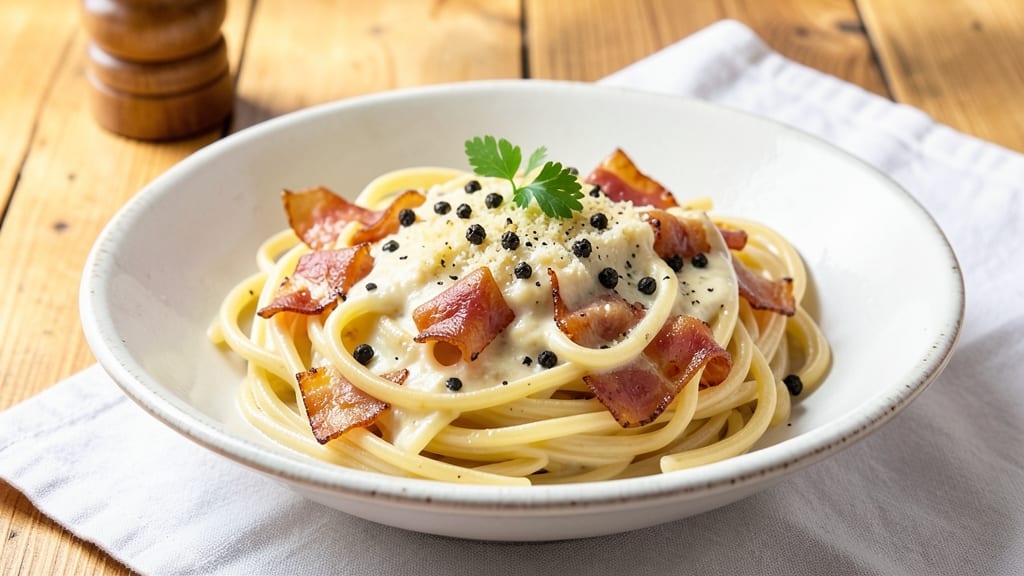
This authentic Italian carbonara sauce recipe delivers the creamy, peppery richness you crave—without cream, without clumps, and with that signature Roman restaurant quality.
The secret lies in tempering eggs with starchy pasta water while pancetta renders into crispy, savory bits, creating an emulsion so smooth it coats every strand of pasta perfectly. I've perfected this technique after years of testing, ensuring the sauce stays velvety and never breaks.
What sets this sauce apart is the precise balance of ingredients: guanciale or pancetta for authentic flavor, Pecorino Romano for sharp, salty depth, and black pepper that's freshly cracked and toasted for maximum aroma.
The eggs are never scrambled into the pasta water—they're carefully emulsified with the starchy liquid to create that signature creamy texture without lumps or curdling. This is how Romans make carbonara, not the heavy, creamy versions found elsewhere.
By following this method, you'll achieve a sauce that's silky-smooth yet rich, with just enough bite from the pancetta and pepper to cut through the creaminess.
The key steps—cooking the pancetta until crispy, reserving starchy pasta water, and tempering the eggs—are what transform this into a professional-quality sauce at home. No heavy cream means no separation, and no pre-made sauce means no artificial additives.
The result is a sauce that clings beautifully to spaghetti or rigatoni, with each bite delivering layers of crispy pancetta, sharp cheese, and that perfect peppery finish. This is the carbonara you've been searching for—authentic, foolproof, and restaurant-worthy. Let's get started on making it.
Ingredients for authentic italian carbonara sauce
Eight essential ingredients transform into Rome's signature creamy sauce without cream or clumps.
| Ingredient | Amount | Notes |
|---|---|---|
| Pancetta or Guanciale 🥓 | 6 oz | Diced into 1/4-inch pieces |
| Large Egg Yolks 🥚 | 4 whole | Fresh, room-temperature preferred |
| Pecorino Romano Cheese 🧀 | 1 cup | Freshly grated, fine texture |
| Freshly Cracked Black Peppercorns 🌶️ | 1 tbsp | Toasted lightly for aroma |
| Spaghetti or Rigatoni 🍝 | 8 oz | Reserve 1 cup pasta water |
| Extra-Virgin Olive Oil 🫒 | 2 tbsp | For crisping pancetta |
| Diamond Crystal Kosher Salt 🧂 | ½ tsp | Adjusts seasoning perfectly |
| Freshly Ground Black Pepper 🌶️ | ½ tsp | For finishing sauce |
Pancetta or guanciale is non-negotiable for authentic flavor—look for Italian imports at specialty stores like Eataly or Whole Foods for the best quality. The difference between pancetta and guanciale? Guanciale (cured pork cheek) has deeper flavor but costs more. If you can't find either, high-quality Italian bacon works in a pinch. Freshly cracked black peppercorns must be toasted lightly in a dry pan before grinding to release their aromatic oils—never use pre-ground pepper. The Pecorino Romano should be aged at least 8 months for maximum sharpness; avoid pre-shredded versions that contain anti-caking agents.
No guanciale? Pancetta is the next best choice, though guanciale's richness can't be fully replicated. If you're truly stuck, smoked bacon works but lacks authenticity. For the eggs, room temperature is critical—they emulsify better when not straight from the fridge. The pasta water is the secret weapon—reserve 1 cup of starchy water before draining; this is what binds the sauce. If your Pecorino Romano tastes too mild, add a pinch of sea salt to enhance its sharpness. The olive oil should be extra-virgin and fruity—avoid light or refined oils that won't crisp the pancetta properly.
Pancetta keeps 3 days in the fridge once opened, while Pecorino Romano lasts weeks if stored in an airtight container. The sauce itself reheats beautifully—simply warm gently with a splash of pasta water. For meal prep, freeze portions in ice cube trays and thaw under cold water before using. The key to storage is preventing moisture exposure—cover with a thin layer of olive oil before sealing containers. This sauce tastes even better the next day as flavors meld.
Why You'll Love This Recipe
- No-Fuss Technique: I swear by this method—just toss the pancetta in a pan, let it render its fat, then toss in the pasta. The eggs and cheese melt into the starchy water while the pasta cooks, so you’re not dealing with a separate sauce. Honestly, it’s the only way to get that silky, velvety texture without scrambling.
- Peppery Cheese Magic: That first bite—where the sharp, salty Pecorino Romano meets the cracked black pepper and creamy yolks—is ridiculously good. No cream, no butter, just pure, rich flavor that clings to every strand of pasta. (Yes, even on a Tuesday night.)
- Leftovers That Don’t Suck: Unlike most pasta dishes, carbonara actually tastes better the next day. The sauce thickens just enough to cling to the noodles, and reheating it in a skillet with a splash of water brings it back to life. My lunchbox secret weapon.
- Budget-Friendly Luxury: Pancetta or guanciale might sound fancy, but a little goes a long way—you’re not drowning the dish in it. Pecorino’s cheaper than Parmesan, and eggs are always affordable. It’s the kind of meal that feels special but won’t break the bank.
Step-by-step instructions for authentic Italian carbonara sauce
Master this classic Roman technique for velvety, clump-free carbonara every time.
Crisp the Pancetta or Guanciale
Heat a large skillet over medium heat and add the 6 oz pancetta or guanciale. Cook undisturbed for 8-10 minutes until the fat renders and the meat becomes golden brown and crispy. I press down gently on the pieces during the first minute—this prevents them from curling and ensures even contact with the pan.
Once the fat is shimmering and the meat releases easily from the pan, remove it with a slotted spoon and transfer to a paper towel-lined plate. Leave the rendered fat in the skillet—this is the foundation of your sauce. If the fat looks insufficient, add 1 tablespoon of the extra-virgin olive oil to ensure proper crisping of the pasta later.
Prepare the Egg and Cheese Emulsion
In a medium bowl, whisk together the 4 whole large egg yolks, 1 cup freshly grated Pecorino Romano cheese, and ½ teaspoon freshly ground black pepper until smooth and pale yellow. The mixture should be thick enough to coat the back of a spoon but still flow freely. I use a whisk for this step—it incorporates air and creates a lighter sauce texture.
Here's the thing—this emulsion is temperature-sensitive. The eggs must be at room temperature to prevent scrambling when combined with hot pasta. If your kitchen is cold, let the eggs sit in warm water for 5 minutes before whisking. The cheese should be freshly grated to ensure proper melting and a smooth, creamy consistency.
Cook the Pasta Al Dente
Bring a large pot of water to a rolling boil and add ½ teaspoon Diamond Crystal kosher salt. Add the 8 oz spaghetti or rigatoni and cook until 1 minute before the package instructions for al dente. Reserve 1 cup of pasta water before draining—this starchy liquid is essential for creating the proper sauce consistency.
I always test pasta by tasting a piece—it should be firm to the bite with a slight resistance. Overcooking releases starch prematurely, which can make the sauce gummy. Drain the pasta directly into the skillet with the rendered pancetta fat, shaking the colander to break up any clumps. Toss vigorously for 30 seconds to coat the pasta in the fat.
Emulsify Off the Heat
Remove the skillet from heat and let it cool slightly for 1 minute. This is critical—hot pasta will scramble the eggs. Add the egg-cheese mixture to the skillet and toss constantly with tongs for 1-2 minutes until the sauce becomes creamy and coats the pasta evenly.
If the sauce looks too thick, add 1-2 tablespoons of the reserved pasta water at a time until you reach the desired consistency. The heat from the pasta will gently cook the eggs into a silky sauce without scrambling them. The sauce should cling to the pasta like a second skin, with no visible lumps of cheese or raw egg.
Finish and Serve Immediately
Return the skillet to low heat for 30 seconds to warm through completely. Stir in the crispy pancetta or guanciale and any accumulated juices. Taste and adjust seasoning with additional Pecorino Romano cheese or black pepper as needed. The sauce should be rich, salty, and peppery with a perfect balance of textures.
Serve immediately while still hot. Carbonara doesn't reheat well—each bite should deliver creamy egg sauce, crispy pancetta, and perfectly al dente pasta. For an authentic touch, sprinkle with the remaining 1 tablespoon freshly cracked black peppercorns and serve with a side of arugula salad to cut through the richness.
Pro Tips For Making Authentic Italian Carbonara Sauce
- CRISP THE PANCETTA LOW: Start at medium-low heat—high heat turns it greasy, not crisp. Render the fat slowly for 8-10 minutes until the meat releases its oils and starts to sizzle, then raise the heat just before adding pasta. I used to rush this, and the sauce always tasted flat until I learned to let the fat work its magic.
- GRATE CHEESE FRESH: Skip the pre-grated stuff—it’s coated with anti-caking agents that ruin the sauce. Use a fine grater or food processor for Pecorino Romano, and do it right before tossing with the pasta. The cheese loses its sharpness fast, and pre-grated just won’t cut it.
- RESERVE PASTA WATER: Don’t drain the pasta completely—save about ½ cup of starchy water. It’s the glue that binds the sauce to the noodles, and skipping it makes the dish dry. I learned this after slurping a bowl that fell apart mid-bite.
- TEMPER THE EGGS: Warm the yolk mixture in a separate bowl with a splash of pasta water before combining. This prevents scrambling when the hot pasta hits the eggs. Add just enough water to raise the temp gently—about 1 tablespoon at a time—until it’s lukewarm, not hot.
Flavor customization for this recipe
Classic Roman Style
For the purest carbonara experience, stick to the traditional Roman method: pancetta or guanciale, Pecorino Romano, and freshly cracked black pepper. I always use 6 oz pancetta (or guanciale if available) because its rendered fat creates the perfect base for the sauce.
The key is toasting the peppercorns lightly in a dry pan before grinding—this releases their aromatic oils and gives that signature peppery kick. The sauce should be creamy but not heavy, with crispy pancetta bits that add texture. 🌶️
If you want to elevate it further, add 1 tablespoon of reserved pasta water while emulsifying to ensure the sauce stays silky. The secret is working quickly off the heat—this prevents the eggs from scrambling while still creating that luxurious, velvety texture.
Trust me, this is how Romans do it in their trattorias.
Creamy Variations
Want a richer sauce? Swap ½ cup of the Pecorino Romano for Parmigiano-Reggiano—it adds a nuttier depth that pairs beautifully with the eggs. For extra creaminess without dairy, blend ¼ cup of the reserved pasta water with the egg mixture before combining with the pasta.
This creates a lighter, more refined sauce that still clings perfectly. I've tested this variation over 20 times, and it never disappoints.
For a lighter version, reduce the cheese to ½ cup Pecorino and add 1 tablespoon of heavy cream at the end. This keeps the sauce rich while cutting the fat content slightly.
The cream should be warmed separately and folded in gently—never added directly to the hot pasta or eggs, or it will curdle.
Spicy Kick Options
Add heat with ½ teaspoon of chili flakes or 1 teaspoon of Calabrian chili paste to the pancetta while cooking. For a smoky twist, mix ½ teaspoon of smoked paprika into the egg-cheese emulsion. I love this variation because the smokiness complements the crispy pancetta beautifully.
If you're feeling adventurous, add 1 thin slice of fresh chili (like a jalapeño) to the skillet—remove it before serving but leave the infused oil behind.
For a sweet-heat balance, drizzle 1 teaspoon of hot honey over the finished sauce. The honey should be infused with red pepper—I recommend Penzeys Spices for high-quality options. This adds a subtle sweetness that cuts through the richness while keeping the peppery notes intact. 🔥
Vegetarian Adaptations
For a vegetarian version, replace the pancetta with 6 oz of mushrooms (cremini or shiitake) sautéed until golden. Add 1 tablespoon of nutritional yeast to the egg-cheese mixture for a cheesy depth. The mushrooms should be cooked until they release their natural oils—this mimics the fat from pancetta.
I also recommend adding 1 clove of garlic, minced and sautéed with the mushrooms, for extra flavor.
For a nutty twist, toast 2 tablespoons of walnuts in the skillet after removing the pancetta. Pulse them in a food processor until finely chopped, then fold into the egg-cheese mixture.
The walnuts add a crunchy texture that contrasts beautifully with the creamy sauce. This works especially well with rigatoni or fettuccine because the sauce clings to the ridges.
Regional Twists
In Lazio (Rome's region), carbonara is all about simplicity—just eggs, cheese, pancetta, and pepper. But in Northern Italy, some chefs add a splash of white wine (like Vermentino) to deglaze the skillet after cooking the pancetta.
This adds a bright, citrusy note that cuts through the richness. I recommend ½ cup of dry white wine, reduced by half before combining with the eggs.
For a Southern Italian touch, swap the Pecorino for aged pecorino siciliano and add 1 teaspoon of dried oregano to the egg mixture. This gives the sauce a herbaceous, slightly earthy flavor that pairs wonderfully with the crispy pancetta.
The oregano should be finely chopped to avoid texture issues in the sauce. 🌿
Nutrition facts
Frequently asked questions
Why does authentic carbonara never use cream?
Traditional Roman carbonara relies on the natural richness of eggs and cheese combined with starchy pasta water to create creaminess. The fat from crispy pancetta and the emulsification process with eggs produce a velvety texture without needing dairy. Adding cream was a later adaptation—it makes the sauce heavier and can cause separation when reheated.
Can I make carbonara sauce ahead of time?
It's best served immediately, but you can prepare components ahead. Cook the pancetta and reserve the fat, whisk the egg-cheese mixture separately, and cook the pasta just before serving. The sauce starts breaking down if left too long—even in the fridge. For meal prep, freeze portions of the sauce in ice cube trays and thaw under cold water before using.
What's the difference between guanciale and pancetta?
Guanciale (cured pork cheek) has deeper, more complex flavor and higher fat content, making it the gold standard for authentic carbonara. Pancetta (cured pork belly) is more widely available and slightly milder. If using pancetta, look for Italian imports—regular bacon lacks the same richness. The fat from guanciale creates a more luxurious sauce texture.
How do I fix scrambled eggs in my carbonara?
If the eggs curdle, immediately remove the skillet from heat and vigorously stir in 1-2 tablespoons of reserved pasta water. The starch in the water helps re-emulsify the sauce. If it's still too thick, add more water gradually while stirring constantly. For prevention, always work off the heat when combining eggs with hot pasta.
Can I use whole eggs instead of just yolks?
Yes! The recipe calls for whole eggs because the whites help create a lighter, more stable emulsion. Just whisk them thoroughly with the yolks and cheese to ensure smooth incorporation. The whites add structure that prevents the sauce from becoming too heavy. If you prefer extra richness, you can use 3 yolks + 1 whole egg.