
Sauces & Condiments
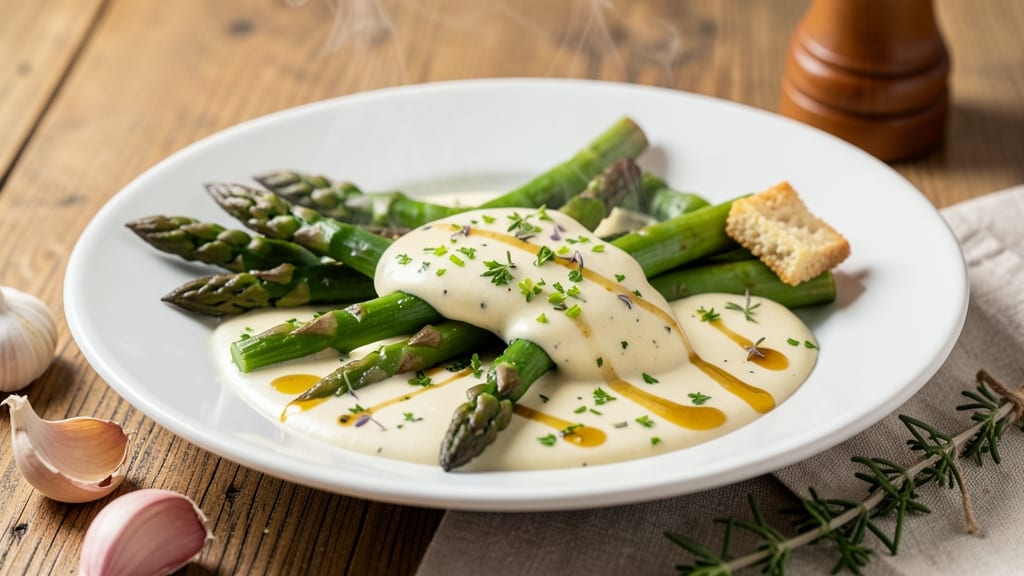
This asparagus white sauce recipe transforms simple ingredients into a velvety, restaurant-quality sauce that clings perfectly to tender spears. The secret lies in a smooth béchamel base—just butter, flour, and milk—elevated with garlic, fresh herbs, and a whisper of nutmeg for depth.
Unlike heavy cream sauces, this version stays light yet rich, with a silky texture that coats every bite.
The magic happens in the technique: cooking the roux just until golden (not browned) prevents bitterness, while whisking in warm milk in a slow stream creates that signature creaminess. A final touch of lemon brightens the richness, balancing the earthy asparagus.
For extra texture, I top it with crispy fried shallots—a crunch that contrasts beautifully against the sauce’s smoothness.
What you’ll end up with is a sauce so creamy and well-seasoned that it turns asparagus into an elegant centerpiece. It’s versatile enough for weeknight dinners or special occasions, pairing equally well with grilled fish, roasted chicken, or even mashed potatoes.
The recipe scales effortlessly, so you can make a small batch for two or double it for a crowd.
Best of all, this sauce keeps its velvety texture even when reheated, making it ideal for meal prep. Store it in the fridge for up to 3 days or freeze for longer—just whisk gently to restore its smoothness. Ready to elevate your asparagus game? Let’s make this sauce.
Ingredients for asparagus white sauce
Twelve ingredients create this velvety asparagus white sauce with restaurant-quality depth and texture.
| Ingredient | Amount | Notes |
|---|---|---|
| Unsalted Butter 🧈 | ½ cup | Cold, cubed for roux |
| All-Purpose Flour 🌾 | ½ cup | Diamond Crystal preferred |
| Whole Milk 🥛 | 2 cups | Warm, not scalded |
| Garlic Cloves 🧄 | 4 cloves | Minced, fresh preferred |
| Fresh Parsley 🌿 | ¼ cup | Chopped, stems removed |
| Fresh Thyme Leaves 🌿 | 1 tbsp | Or 1 tsp dried thyme |
| Ground Nutmeg 🌶️ | ¼ tsp | Freshly grated preferred |
| Lemon Juice 🍋 | 1 tbsp | Freshly squeezed |
| Shallots 🧅 | 2 whole | Thinly sliced for frying |
| Olive Oil 🫒 | ¼ cup | For frying shallots |
| Salt 🧂 | ½ tsp | Kosher or sea salt |
| White Pepper 🌶️ | ⅛ tsp | Freshly cracked preferred |
The quality of your butter and flour forms the sauce's foundation. European-style unsalted butter from brands like Plugrá or Kerrygold adds richness without overpowering, while Diamond Crystal flourfarmers market parsley and thyme provide the freshest flavor—look for vibrant green leaves with no wilting. The nutmeg should be freshly grated; pre-ground loses potency quickly. If you're using dried thyme, measure it at one-third the amount of fresh. The shallots? French green shallots from the produce section have the best balance of sweetness and bite for frying.
No fresh herbs? Dried oregano or basil at half the amount works in a pinch, though the flavor won't be as bright. Substituting milk? Heavy cream makes the sauce richer but heavier—use equal parts. For a dairy-free version, full-fat coconut milk creates a similar texture (though with coconut undertones). The lemon juice can be swapped for white wine vinegar if needed, but fresh lemon adds a brightness that's hard to replicate. If you can't find shallots, green onions fried in olive oil provide a similar crunch. For extra depth, a pinch of smoked paprika adds complexity without altering the sauce's fundamental character.
This sauce reheats beautifully—simply warm over low heat with a splash of milk to restore its silky texture. Store in an airtight container in the fridge for up to 3 days, or freeze for 3 months in portions. The fried shallots can be made ahead and stored separately; just reheat in the oven at 350°F for 3-4 minutes to restore crispness. For meal prep, assemble the sauce without the shallots, then add them fresh when serving. The sauce thickens as it cools, so thin with a little warm milk if needed when reheating.
Why You'll Love This Recipe
- Five-Ingredient Magic: I swear by this—just butter, flour, milk, garlic, and parsley. That’s it. No fancy pantry raids or last-minute grocery runs. The sauce comes together while you trim asparagus, and honestly? The flour-butter-milk roux does all the heavy lifting.
- Garlic-Parsley Punch: Between us, that minced garlic sizzling in butter is my favorite part. It infuses the sauce with this bright, almost nutty depth, and the parsley? Freshly chopped at the end adds that herbal pop that makes it feel gourmet—no green packet nonsense.
- Weeknight to Dinner Party: I’ve served this over grilled asparagus for a lazy Tuesday, but it also shines under roasted chicken or even as a pasta sauce. The richness balances perfectly with spring veggies, and it’s the kind of dish that makes you look like you slaved when you didn’t.
- Leftovers That Don’t Suck: This sauce actually tastes better the next day—thicker, richer, and ready to reheat with a splash of milk. I double the batch, freeze half, and pull it out for lazy lunches or when I’m too tired to cook. No sad, watery leftovers here.
Step-by-step instructions for asparagus white sauce
This velvety garlic-herb sauce delivers restaurant-quality creaminess with a crispy shallot topping—every technique matters.
Create a Smooth Roux Foundation
Melt the 0.5 cup unsalted butter in a medium saucepan over medium-low heat until it foams but doesn't brown. Immediately whisk in the 0.5 cup all-purpose flour—this prevents lumps and ensures a silky texture. Cook for 2-3 minutes, stirring constantly, until the mixture turns pale golden and smells nutty. The roux is the backbone of your sauce, so don't rush this step.
Watch for the moment it transforms from raw flour taste to toasty aroma—that's your cue to proceed. If it darkens too quickly, reduce heat immediately. This roux will thicken the sauce properly and carry all those aromatic flavors we're building.
Gradually Incorporate Warm Milk
Slowly pour in the 2 cups warm whole milk while whisking vigorously to prevent clumping. I like to add it in a thin stream at first, then gradually increase the flow as the mixture thickens. Return the pan to medium heat and cook for 5-7 minutes, stirring frequently, until the sauce thickens enough to coat the back of a spoon.
This gradual addition is critical—adding milk too quickly creates lumps that never dissolve. The sauce should now be smooth and glossy, with a velvety consistency. If it thickens too fast, whisk in 1-2 tablespoons of milk to adjust. The goal is a sauce that coats the asparagus perfectly without being gluey.
Infuse with Aromatics and Seasonings
Remove the pan from heat and stir in the 4 minced garlic cloves, 1 tbsp fresh thyme leaves, 0.25 tsp ground nutmeg, 0.5 tsp salt, and 0.125 tsp white pepper. Let the mixture steep for 5 minutes off the heat—this allows the flavors to meld completely. The nutmeg adds subtle warmth, while the thyme brings an earthy depth that pairs beautifully with asparagus.
After steeping, return the pan to low heat and whisk in the 1 tbsp lemon juice. This brightens the sauce and balances the richness. Taste and adjust seasoning—you might need a pinch more salt or pepper to complement the asparagus you'll serve with it. The sauce should now have a complex, layered flavor profile that's creamy yet vibrant.
Prepare the Crispy Shallot Topping
While the sauce simmers gently, heat 0.25 cup olive oil in a small skillet over medium heat. Add the 2 thinly sliced shallots and fry for 3-4 minutes until golden brown and crispy at the edges. Remove with a slotted spoon and drain on paper towels—these shallots will add texture contrast to your sauce.
Don't overcrowd the pan or the shallots will steam instead of crisp. You want them to develop a caramelized edge while remaining tender inside. The crispy shallots should be the last component added to the sauce, just before serving, to maintain their perfect texture.
Finish and Serve with Herb Garnish
Return the sauce to low heat and stir in the 0.25 cup chopped fresh parsley. This adds freshness and a pop of color that makes the dish visually appealing. Keep the sauce warm but not simmering—overcooking can cause it to separate. Just before serving, spoon the crispy shallots over the top of the sauce for that satisfying crunch.
The sauce should now be luxuriously creamy with a perfect balance of garlic, herbs, and lemon brightness. Serve immediately over grilled asparagus or your choice of protein. The contrast between the velvety sauce and crispy shallots creates an unforgettable textural experience that elevates any dish.
Pro Tips For Making Asparagus White Sauce
- Melt Butter Slowly: Heat the butter over medium-low instead of medium—high heat burns before the roux forms, and you’ll end up with a grainy, bitter sauce. I learned this the hard way when my first batch tasted like a sad, buttery glue.
- Toast the Flour First: Cook the butter and flour together for 1-2 minutes until the mixture smells nutty and turns a pale golden color. Skipping this step means your sauce will taste raw and floury, no matter how long you simmer later.
- Use Cold Milk: Temper the milk by adding it to the roux in a thin, steady stream while whisking like your life depends on it. Pouring cold milk too fast creates lumps that won’t disappear, no matter how much you strain.
- Press the Garlic: Smash the garlic cloves with the flat side of your knife before mincing—this releases more flavor without burning. I was skeptical until I tried it: the sauce went from "meh" to "wow" in one step.
Serving suggestions for this recipe
Asparagus Pairings
Serve this white sauce over grilled asparagus for a showstopping main course—brush the spears with olive oil, sprinkle with sea salt, and grill until tender-crisp (3-4 minutes). The sauce clings beautifully to charred edges, creating a perfect balance of textures.
For a lighter option, pair with steamed asparagus and add a squeeze of lemon to brighten the dish. 🌿
Protein Combinations
This sauce elevates pan-seared chicken breast or shrimp skewers to restaurant-level elegance. For chicken, sear 6-ounce breasts in olive oil until golden (4-5 minutes per side), then top with sauce.
For shrimp, grill 12-16 large shrimp for 2-3 minutes per side and nestle them into the sauce before serving. The crispy shallots add a delightful contrast to both proteins.
Vegetable Sides
Transform roasted potatoes into a hearty side by tossing 1 lb baby potatoes in 2 tbsp olive oil, 1 tsp rosemary, and salt, then roasting at 400°F for 25-30 minutes. Spoon the white sauce over the warm potatoes for a creamy, satisfying dish.
Alternatively, drizzle it over sautéed green beans for a lighter option—toss 1 lb green beans in 1 tbsp butter and 1 minced garlic clove for 3-4 minutes before adding the sauce.
Bread and Dipping
Use this sauce as a dipping sauce for crusty bread or arugula salad. Toast a baguette and cut into slices, then serve with the sauce for dipping.
For salad, toss 4 cups arugula with 1 tbsp balsamic vinegar and 1 tbsp olive oil, then drizzle with a thin layer of the sauce. The crispy shallots add a fun crunch to both presentations. ✨
Meal Prep Ideas
Make ahead by preparing the sauce 1 day in advance and storing it in an airtight container in the fridge. Reheat gently over low heat with a splash of milk to restore its silky texture.
For a complete meal prep, cook chicken breast or shrimp ahead, store separately, and assemble just before serving. The crispy shallots should be added fresh to maintain their crunch—fry them 5 minutes before serving and keep warm in a 200°F oven.
Nutrition facts
Frequently asked questions
Can I make this white sauce without butter?
Yes! For a dairy-free version, substitute the butter with 0.5 cup vegan butter or 0.5 cup olive oil—just use olive oil for a lighter texture. The sauce will still turn out creamy, though the flavor will be slightly different. If you're avoiding all dairy, use full-fat coconut milk instead of regular milk for the roux step, but note it may have subtle coconut undertones.
Why did my sauce turn out lumpy?
Lumps usually happen when milk is added too quickly or the roux isn't cooked long enough. To fix it, whisk in 1-2 tablespoons of warm milk at a time while stirring vigorously. For future batches, cook the roux until it's pale golden (about 2-3 minutes) before adding milk. If lumps persist, strain the sauce through a fine-mesh sieve for a silky finish.
How do I adjust the thickness of the sauce?
If your sauce is too thick, whisk in 1-2 tablespoons of warm milk to loosen it. For a thicker consistency, simmer uncovered for 1-2 minutes to evaporate excess liquid. The ideal texture should coat the back of a spoon but still flow smoothly. Remember, sauces thicken as they cool, so adjust while warm to get the perfect consistency when served.
Can I make this sauce ahead of time?
This sauce keeps well in the fridge for up to 3 days in an airtight container. For best results, reheat gently over low heat with a splash of milk to restore its silky texture. The crispy shallots should be added fresh just before serving to maintain their crunch—fry them 5 minutes before serving and keep warm in a 200°F oven.
What's the best way to store leftover sauce?
Store in an airtight container in the fridge for up to 3 days, or freeze for 3 months in portions. To reheat, warm over low heat while whisking gently to prevent separation. If the sauce thickens too much when reheated, thin with a little warm milk. The crispy shallots can be stored separately in the fridge for 2 days—just reheat in the oven at 350°F for 3-4 minutes to restore crispness.