
Sauces & Condiments
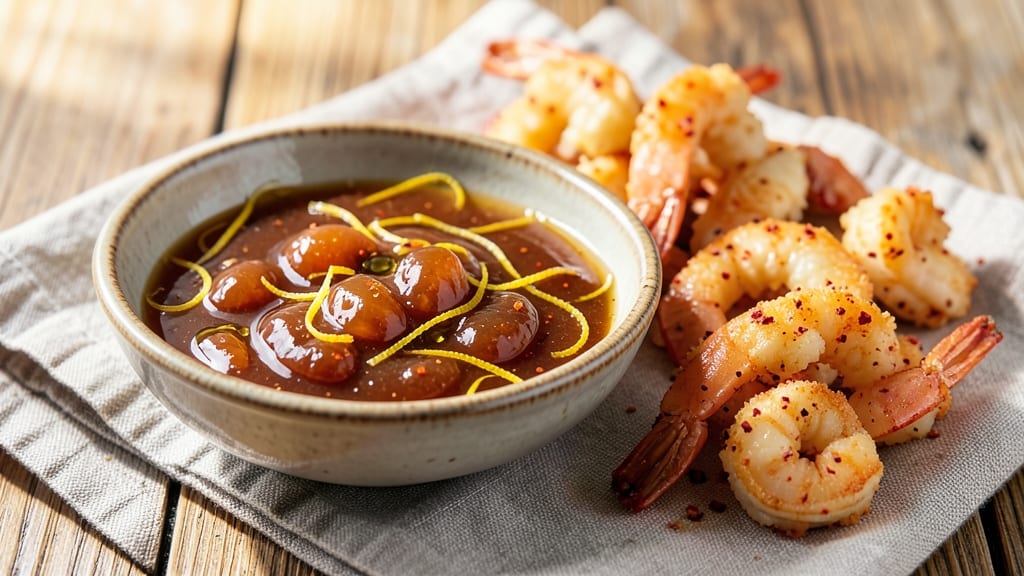
This apricot dipping sauce transforms ordinary coconut shrimp into an unforgettable dish by balancing sweet, tart, and subtle heat. The secret lies in blending apricot preserves with honey and citrus, creating a glossy, velvety sauce that cuts through the richness of fried shrimp.
I developed this recipe after realizing store-bought sauces never quite hit the mark—too sweet, too thin, or lacking depth.
The magic happens when you simmer apricot preserves with honey, a splash of orange juice, and a pinch of red pepper flakes. This combination delivers a sweet-tart velocity that enhances the coconut shrimp's natural sweetness while adding a tantalizing kick.
The sauce thickens just enough to cling beautifully, ensuring every bite is coated in that perfect balance of flavors.
What makes this sauce truly special is its versatility—it works equally well with crispy coconut shrimp, grilled chicken, or even as a glaze for pork. The preparation takes just 10 minutes, and the ingredients are simple: apricot preserves, honey, citrus, and a touch of spice.
Once made, it keeps in the fridge for up to a week, ready to elevate any dish.
For an extra layer of complexity, I recommend adding a splash of lime zest or a dash of soy sauce to deepen the flavor profile. This sauce isn’t just about balancing heat—it’s about creating a harmonious symphony of tastes that turns a simple appetizer into a standout centerpiece.
Let’s make it.
Ingredients for apricot dipping sauce for coconut shrimp
Sweet-tart balance comes from just ten ingredients—simple yet transformative.
| Ingredient | Amount | Notes |
|---|---|---|
| Apricot Preserves 🍑 | 1 cup | High-quality, no added sugar preferred |
| Honey 🍯 | ¼ cup | Raw or wildflower preferred |
| Fresh Orange Juice 🍊 | ¼ cup | Freshly squeezed for bright flavor |
| Orange Zest 🍊 | 1 tbsp | From 1 medium orange |
| Red Pepper Flakes 🌶️ | ½ tsp | Adjust for heat preference |
| Extra-Virgin Olive Oil 🫒 | 1 tbsp | For glossy finish |
| Fresh Lime Juice 🍋 | 1 tbsp | Optional for extra tang |
| Lime Zest 🍋 | ½ tsp | Optional for depth |
| Soy Sauce 🍜 | ½ tsp | Optional for umami |
| Salt 🧂 | ¼ tsp | Kosher or sea salt |
The apricot preserves are the foundation—look for brands like Bonne Maman or local preserves with minimal additives. Honey adds depth, but raw or wildflower varieties (like Madhava) bring more complexity than regular grocery store honey. Fresh orange juice is non-negotiable here; bottled lacks the brightness. If you're using jarred juice, squeeze it through a fine-mesh strainer to remove pulp. The orange zest should be vibrant—yellow, not white, and freshly grated for maximum aroma. For the red pepper flakes, Penzeys or Trader Joe's carry high-quality options that won't overpower.
No fresh orange juice? Freshly squeezed grapefruit juice at half the amount works surprisingly well. Short on honey? Maple syrup (same quantity) keeps the sauce cohesive, though it'll be slightly less floral. The lime juice and zest are optional but worth the effort—they add that restaurant-quality tang. Soy sauce isn't traditional, but a dash elevates the umami without overpowering. If you're avoiding soy, a pinch of fish sauce (just 1/4 tsp) delivers the same depth. For those watching sugar, reduce the honey to 2 tbsp and add 1 tbsp water to balance the texture.
This sauce keeps beautifully—transfer to a clean jar and store in the fridge for up to 1 week. The flavors actually improve overnight as everything melds. For longer storage, portion into ice cube trays, freeze, then transfer to a bag. Thaws in minutes under warm water. The olive oil on top creates a protective seal, so add it just before storing. Reheat gently in a small saucepan—never microwave, or the texture breaks down. Perfect for dipping, glazing, or drizzling over grilled proteins.
Why You'll Love This Recipe
- Five-Ingredient Magic: I swear by this—just stir apricot preserves, honey, and orange juice in a saucepan until it’s silky smooth. No fancy techniques, no measuring cups beyond what you’d use for a quick cocktail. Honestly, the hardest part is waiting for it to cool enough to taste-test.
- Sweet-Heat Balance: That first bite of crispy coconut shrimp with the sauce clinging to it? Chef’s kiss. The apricot’s jammy richness cuts through the coconut’s richness, while the orange zest and red pepper flakes add a bright, spicy kick that makes it feel fancy without trying too hard.
- Game for Any Gathering: Between us, this sauce is my go-to for date nights, potlucks, or when I’m feeding a crowd without stressing. It pairs perfectly with shrimp, chicken skewers, or even grilled veggies—just scale the batch, and you’re set. (Yes, even on a Tuesday night.)
- Leftovers That Don’t Suck: Unlike so many sauces that turn gloppy or separate, this one actually improves overnight. I’ll make a double batch, store it in the fridge, and use it all week—drizzled over stir-fries, tossed with rice, or even as a glaze for roasted carrots. Zero waste, all flavor.
Step-by-step instructions for apricot dipping sauce for coconut shrimp
This sauce balances sweet, tangy, and subtle heat perfectly—here's how to make it shine.
Warm the Apricot Preserves and Honey
Combine the 1 cup apricot preserves and 0.25 cup honey in a small saucepan over medium-low heat. Stir gently until the mixture reaches a gentle simmer, which should take about 3-4 minutes. You're looking for a smooth, thick consistency—the preserves should lose their chunkiness while retaining their rich color. If it thickens too quickly, add 1 tablespoon water to maintain the right texture.
This warming step is crucial for melding the flavors and ensuring the sauce emulsifies properly later. The honey helps balance the natural tartness of the apricot preserves, creating a foundation for the citrus and spice we'll add next. Keep the heat low to prevent burning, as sugar can scorch easily.
Incorporate Citrus and Umami Elements
Remove the saucepan from heat and let it cool slightly for 2 minutes. Then, whisk in the 0.25 cup fresh orange juice, 1 tablespoon orange zest, 0.5 teaspoon soy sauce, and 0.25 teaspoon salt. The citrus brightens the apricot's sweetness while the soy sauce adds depth. Return the pan to low heat and stir continuously for 2-3 minutes until the mixture is fully combined and heated through.
Here's where the sauce starts to come together. The orange zest adds a fragrant, aromatic layer that complements the sweetness, while the soy sauce introduces a subtle umami note that pairs beautifully with coconut shrimp. Stirring constantly prevents the zest from settling at the bottom and ensures even distribution of all ingredients.
Add Finishing Touches for Balance
Once the mixture is warm and fully incorporated, whisk in the 1 tablespoon fresh lime juice, 0.5 teaspoon lime zest, 0.5 teaspoon red pepper flakes, and 1 tablespoon extra-virgin olive oil. The lime juice and zest add a sharp, citrusy contrast to the sweet apricot, while the red pepper flakes introduce a gentle heat that balances the overall flavor profile. The olive oil gives the sauce a silky texture and glossy finish.
Taste the sauce and adjust the seasoning if needed. If it needs more sweetness, add a touch more honey. If it's too tart, add a bit more apricot preserves. The red pepper flakes can be adjusted to your heat preference—start with 0.5 teaspoon and add more if you prefer a spicier kick. The sauce should be vibrant, glossy, and perfectly balanced between sweet, tangy, and slightly spicy.
Rest and Serve
Transfer the sauce to a bowl and let it rest at room temperature for 10-15 minutes. This allows the flavors to meld even further and the sauce to reach its ideal consistency. The resting time also helps the red pepper flakes disperse evenly, ensuring every bite of coconut shrimp gets a touch of heat.
Serve the sauce warm or at room temperature alongside your coconut shrimp. The contrast of the sweet-tart sauce with the crispy, savory shrimp creates a harmonious balance of flavors. If the sauce thickens as it cools, simply whisk in 1-2 teaspoons of water to loosen it to your desired consistency. This sauce is best enjoyed fresh, so don't make it too far ahead of serving.
Pro Tips For Making Apricot Dipping Sauce For Coconut Shrimp
- STRAIN THE FRUIT: Apricot preserves are thick with seeds and skins—skip the blender and strain them through a fine-mesh sieve first. I learned this the hard way when a chunky bite ruined the smooth texture, and now I always do this step. Use a rubber spatula to press every last bit through, or you’ll end up with a sauce that tastes like you chewed it yourself.
- WARM THE HONEY: Drizzle honey into cold orange juice, and it’ll just sit there like a stubborn guest. Gently warm the honey (just until it flows easily) before mixing—this helps it blend seamlessly and prevents clumping. A 10-second dip in warm water works; no need to boil it into syrup.
- ZEST FIRST, JUICE LATER: Add orange zest to the warm preserves before the juice—this way, the oils infuse fully instead of floating on top. I used to toss it in last and wondered why my sauce lacked that bright, citrusy punch. A microplane gives you more surface area, so don’t skimp on the zest.
- SALT THE PEPPER: Red pepper flakes are all about balance—start with ½ teaspoon and taste before adding more. The honey and apricots are already sweet, so unsalted flakes can make the sauce taste one-dimensional. A pinch of salt (even just ⅛ teaspoon) makes the heat sing. Yes, it sounds weird, but trust me.
Essential equipment for perfect results
Small Saucepan
You’ll need a small, heavy-bottomed saucepan—I recommend a 2-quart stainless steel pan like the All-Clad Stainless or Cuisinart MultiClad—to prevent scorching and ensure even heating. The sauce’s low-and-slow simmer requires steady heat distribution, so avoid thin, warped pans that can create hot spots.
A 2-quart capacity gives you enough room to stir without spills while keeping the mixture at an ideal temperature. 🌡️
Whisk for Emulsification
A balloon whisk or French whisk is essential for blending the sauce smoothly. I prefer a stainless steel whisk with a long handle (like the OXO Good Grips) because it reaches every corner of the pan and prevents zest from settling.
Whisking vigorously when adding citrus and olive oil creates that velvety texture that makes this sauce restaurant-worthy.
Fine-Mesh Strainer
If you’re using jarred orange juice or want ultra-smooth texture, a fine-mesh strainer (like the Hamilton Beach Strainer) removes pulp and seeds that can make the sauce grainy. I also use it to strain fresh orange juice if I accidentally squeeze it too vigorously.
For zest, a Microplane grater (not a box grater) ensures you get fine, aromatic strips without bitter pith.
Measuring Spoons
Precision matters with spices and zest—precision measuring spoons (like the OXO Good Grips set) let you add exactly 0.5 teaspoon red pepper flakes or 1 tablespoon lime zest without guesswork. A spoon rest (like the OXO Good Grips) keeps them clean and organized while you work.
Don’t skip measuring the zest: too much can make the sauce bitter, while too little leaves it flat. 🍋
Glass Jar for Storage
Store your sauce in a clean, airtight glass jar (like a Le Parfait 16-ounce jar) to preserve freshness for up to 1 week. Glass won’t absorb flavors like plastic, and the wide mouth makes it easy to whisk in extra water if needed.
I label mine with the date—this sauce tastes even better the next day as flavors meld! For longer storage, ice cube trays work perfectly for portion control.
Citrus Zester
A dedicated citrus zester (like the Microplane Citrus Zester) is worth the investment for this recipe. It yields fine, even zest without the pith, which can make the sauce bitter.
I also use it for lime zest—just 0.5 teaspoon adds brightness without overpowering. If you don’t have one, a peeler works in a pinch, but it’s messier and less precise. 🍊
Nutrition facts
Frequently asked questions
Can I make this apricot dipping sauce without honey?
Yes! Replace the 0.25 cup honey with 0.25 cup maple syrup for a similar sweetness level, though the flavor will be slightly less floral. For a lower-sugar option, use 0.2 cup agave nectar and add 1 teaspoon water to maintain the right consistency. The sauce will still taste delicious, but the texture may be slightly thinner.
How can I adjust the heat level in this sauce?
Start with 0.5 teaspoon red pepper flakes for a gentle kick, then adjust to taste. For more heat, add 0.25 teaspoon at a time—it's easier to increase than reduce. If you prefer a smoky flavor, swap the red pepper flakes for 0.5 teaspoon smoked paprika instead. Always taste before serving!
Will this sauce work with other proteins besides shrimp?
This sauce pairs beautifully with grilled chicken, pork tenderloin, or even roasted vegetables. The sweet-tart balance complements the natural sweetness of pork, while the citrus notes cut through richer meats like chicken. For vegetarian options, try drizzling it over halloumi cheese or grilled tofu.
What if my sauce separates or gets too thick?
If the sauce separates, whisk in 1 teaspoon warm water at a time until smooth. For thickening, simmer uncovered for 1-2 extra minutes to reduce. If it's too thick after cooling, thin with 1 teaspoon water or orange juice. The sauce should coat the back of a spoon but remain pourable.
Can I make this sauce ahead of time?
Yes! This sauce actually tastes better after resting. Make it 1 day ahead and store in an airtight container in the fridge. Stir well before serving, as flavors meld beautifully overnight. For longer storage, freeze in ice cube trays—thaw by letting sit at room temperature for 10 minutes or warm gently in a saucepan.