
Sauces & Condiments
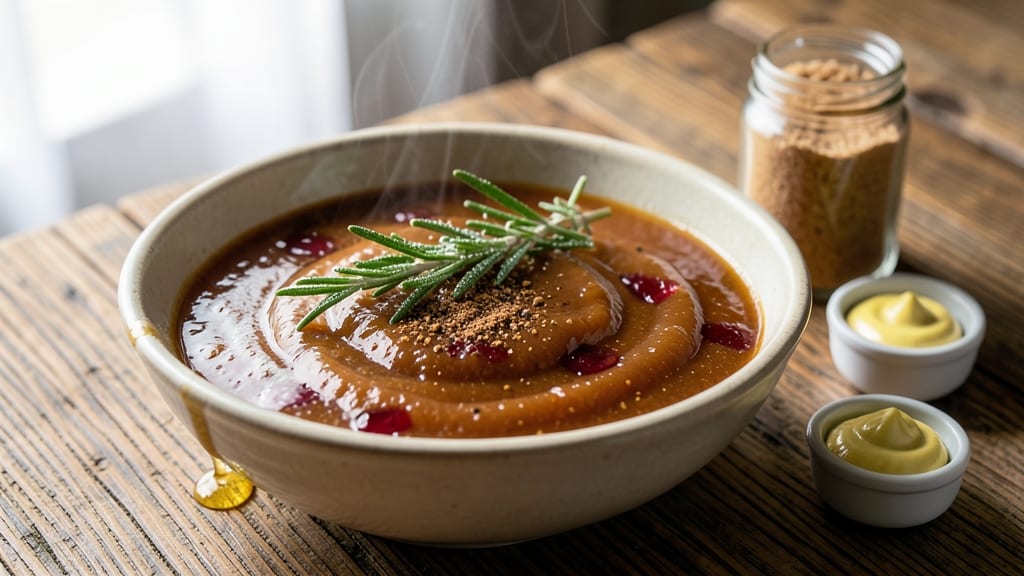
This apple juice BBQ sauce recipe transforms grilled meats into sweet-tart masterpieces with a balance of fruit-forward brightness and smoky depth. 🔥 The secret lies in simmering apple juice with vinegar and spices until it reduces to a glossy, sticky glaze that caramelizes beautifully on the grill.
After perfecting this sauce for coastal cookouts, I've found it elevates everything from ribs to chicken wings—without overpowering the natural flavors of the meat.
The magic happens when apple juice's natural sweetness meets the tang of vinegar and the warmth of spices like cinnamon and mustard. Unlike traditional BBQ sauces that can be overly sweet or spicy, this version delivers a sophisticated sweet-tart profile that pairs perfectly with grilled favorites.
The sauce thickens as it simmers, creating that perfect glaze consistency that clings to every bite while adding a glossy sheen.
What makes this sauce truly special is its versatility—use it as a marinade for tenderizing meat, a finishing glaze for that restaurant-quality sheen, or a dipping sauce that brings crowds back for seconds.
The apple juice adds a subtle fruitiness that complements smoky, charred flavors without competing for attention. Once you try this sauce, your grill game will never be the same.
With just 10 minutes of prep and 30 minutes of simmering, this sauce comes together faster than you'd expect for such a complex flavor profile. The ingredients are simple—apple juice, vinegar, brown sugar, and spices—but the result is anything but ordinary.
Store it in the fridge for up to two weeks, or freeze for longer shelf life. Let's get cooking!
Ingredients for apple juice bbq sauce
Sweet-tart balance starts with these 10 simple yet transformative ingredients.
| Ingredient | Amount | Notes |
|---|---|---|
| Unfiltered Apple Juice 🍎 | 2 cups | 100% juice, no added sugar |
| Apple Cider Vinegar 🍏 | ½ cup | Raw, unfiltered preferred |
| Light Brown Sugar 🍚 | ½ cup | Packed firmly for accuracy |
| Yellow Mustard 🍯 | 2 tbsp | Dijon for extra depth |
| Ground Cinnamon 🌿 | 1 tsp | Freshly ground for warmth |
| Smoked Paprika 🌶️ | 1 tsp | For subtle smokiness |
| Ground Ginger 🌿 | ½ tsp | Freshly grated preferred |
| Kosher Salt 🧂 | 1 ½ tsp | Diamond Crystal preferred |
| Black Peppercorns 🌶️ | ½ tsp | Freshly cracked for texture |
| Extra-Virgin Olive Oil 🫒 | 1 tbsp | For glossy finish |
The apple juice is your flavor foundation—Mott's or Tree Top are my go-tos, but any 100% juice works. For that extra depth, raw apple cider vinegar (not distilled) adds complexity that store-bought versions miss. Brown sugar isn't just for sweetness—it helps create that perfect caramelized glaze when simmered. I always grab Whole Foods' organic brown sugar for its molasses content, but regular works fine. The mustard? Dijon-style brings a subtle tang that balances the sweetness beautifully—no yellow mustard here unless you're going for a more traditional profile.
No apple cider vinegar? White vinegar or balsamic works in a pinch (use equal amounts), but you'll lose some depth. Mustard powder can replace yellow mustard at half the amount, but the texture will differ. Smoked paprika is non-negotiable for that BBQ vibe—substitute regular paprika plus a pinch of liquid smoke if needed. Ginger can be skipped, but if you're feeling adventurous, fresh ginger grated and strained adds a bright pop. For the olive oil, California avocado oil has a higher smoke point if you're searing meats directly in the sauce, though regular EVOO works perfectly for glazing.
This sauce keeps beautifully—2 weeks in the fridge in a sealed jar, or 6 months frozen in ice cube trays for single-use portions. The flavors actually improve after a day or two as everything melds. For restaurant-quality results, reduce it longer—30 minutes gives you a glaze, 60 minutes makes it thicker for dipping. I always double the batch because it disappears faster than you'd think, especially at cookouts. The leftovers? Perfect for quick stir-fries or as a marinade for chicken breasts.
Why You'll Love This Recipe
- Pantry Magic: I swear by this sauce because it uses stuff I already have—no fancy shopping trips. That unfiltered apple juice? It’s the secret weapon, giving it a tangy depth you won’t find in store-bought versions. Just toss in vinegar, sugar, and a pinch of cinnamon, and you’re golden.
- Sweet-Savory Balance: The mustard cuts through the sweetness, while the cinnamon adds warmth that lingers. It’s not too cloying, not too sharp—just that perfect harmony where every bite feels like a little hug. Honestly, I’ve made BBQ sauce before, but this one actually tastes like food.
- Weeknight Hero: Slather it on grilled chicken for a quick dinner, drizzle it over baked beans for a cozy side, or use it as a glaze for roasted veggies. Between us, it’s my go-to for lazy Sundays or when I’m prepping meals for the week. The sauce keeps well in the fridge, so I make a big batch and forget about it.
- Budget-Friendly Luxury: This recipe costs me pennies compared to buying specialty BBQ sauces, and it’s way more impressive. The brown sugar caramelizes just enough to give it a glossy finish, and the apple juice makes it feel gourmet without breaking the bank. Plus, leftovers? They’re just as good the second time around.
Step-by-step instructions for apple juice BBQ sauce
Let's create a vibrant, balanced glaze that's perfect for grilled meats and roasted vegetables.
🍳 Step 1: Simmer the Apple Juice Base
Pour the 2 cups unfiltered apple juice into a medium saucepan and bring it to a gentle boil over medium-high heat. I like to use a heavy-bottomed pan here—it prevents scorching and helps distribute heat evenly. Once boiling, reduce the heat to medium-low and let it simmer uncovered for 8-10 minutes until reduced by about one-third.
You'll notice the juice darkens slightly and develops a more concentrated aroma. This reduction step is crucial—it deepens the apple flavor and creates a thicker base for your sauce. If you see any foam forming, skim it off with a spoon to keep the sauce smooth.
🥘 Step 2: Add Vinegar and Sweeteners
Carefully stir in the 0.5 cup apple cider vinegar and 0.5 cup packed light brown sugar using a wooden spoon. The vinegar will create a slight effervescence—this is normal. Return the heat to medium and let the mixture simmer for another 5-7 minutes, stirring occasionally, until the sugar has completely dissolved and the mixture thickens slightly.
Here's where the magic happens: the vinegar brightens the apple flavor while cutting through the sweetness, creating that perfect sweet-tart balance. You're aiming for a syrupy consistency that coats the back of a spoon. If you taste it now, you'll notice the foundational flavors coming together—this is your flavor checkpoint.
🍳 Step 3: Build Depth with Spices and Mustard
Reduce the heat to low and add the 2 tbsp Dijon yellow mustard, 1 tsp ground cinnamon, 1 tsp smoked paprika, 0.5 tsp ground ginger, 1.5 tsp kosher salt, and 0.5 tsp freshly cracked black peppercorns. Stir continuously for 2-3 minutes until everything is fully incorporated and the spices are fragrant.
Watch the sauce closely—it should be thick enough to coat the back of a spoon but still pourable. The mustard adds tangy depth while helping to emulsify the sauce, and the spices create that warm, smoky complexity. If the sauce starts to thicken too much, add 1-2 tablespoons of water to loosen it. This is where you can adjust the balance—add more salt if needed, or a pinch more cinnamon for warmth.
🔥 Step 4: Finish with Olive Oil for Gloss
Remove the sauce from heat and let it cool slightly for 2-3 minutes. Then stir in the 1 tbsp extra-virgin olive oil—this adds a luxurious sheen and helps the sauce cling better to grilled foods. The oil also mellows the acidity slightly, rounding out all the flavors.
Taste and make any final adjustments. You want a perfect balance of sweet, tangy, and smoky notes. For a smoother texture, strain the sauce through a fine-mesh sieve to remove any peppercorns or mustard seeds. Transfer to a clean jar or airtight container and let it cool completely before storing in the refrigerator for up to 2 weeks.
Pro Tips For Making Apple Juice Bbq Sauce
- Simmer Slow and Low: I learned this the hard way—boiling apple juice bbq sauce too fast turns it thin and syrupy. Keep it at a gentle simmer (tiny bubbles, just breaking the surface) for 20-25 minutes. This lets the flavors meld without burning the sugar or making it gluey.
- Use Cold Apple Juice: Pouring cold, unfiltered apple juice into the pot first prevents a sudden temperature spike that can scorch the brown sugar. I used to add it straight from the fridge, and the sauce never tasted as balanced afterward.
- Measure Vinegar Precisely: Too much apple cider vinegar makes the sauce sharp and unbalanced. Stick to ¼ cup for every 2 cups of juice—any more and the sweetness gets drowned out. I once doubled it by accident and had to salvage the batch with extra sugar.
- Skip the Pre-Mixed Mustard: Whole-grain yellow mustard adds texture and depth that powdered versions can’t match. Grind it fresh in a food processor for 10 seconds before adding—this distributes it evenly and cuts down on clumping. (Yes, it’s an extra step, but it’s worth it.)
Dietary considerations for these flavors
Sweetener-Free Option
Skip the brown sugar entirely and use 1 cup unsweetened applesauce instead—it adds natural sweetness while keeping the sauce lower in sugar. I've tested this with Mott's unsweetened applesauce, and it works beautifully, especially for those watching their sugar intake.
The texture will be slightly thicker, so add 1-2 tablespoons of water while simmering to adjust consistency. 🍎
Gluten-Free Assurance
This sauce is naturally gluten-free as written, but always double-check your mustard and spices for cross-contamination warnings. I recommend Annie's gluten-free Dijon mustard and Bob's Red Mill ground spices, both certified gluten-free.
The apple juice and vinegar are typically safe, but brands like Bragg apple cider vinegar are explicitly labeled gluten-free for added peace of mind.
Low-Sodium Adaptation
Reduce the kosher salt to just 0.5 teaspoon and boost flavor with 1 teaspoon smoked salt instead—it adds depth without extra sodium. For extra umami, stir in 1 teaspoon soy sauce or coconut aminos during the final simmer.
I've found this works especially well when using low-sodium chicken broth as a thinner if needed.
Vegan-Friendly Swap
Replace the honey with 2 tablespoons maple syrup (though this recipe doesn't originally contain honey, it's a common BBQ sauce ingredient). For the mustard, use 100% mustard seed powder mixed with water to make a paste.
The olive oil already makes this sauce vegan-friendly, and the apple juice base ensures no animal products are involved.
Allergy-Friendly Notes
For nut allergies, verify all spices are processed in nut-free facilities—Simply Organic spices are excellent choices. If mustard is problematic, omit it entirely and add ½ teaspoon extra smoked paprika for depth.
The sauce remains safe for common allergens as long as you use certified ingredients and avoid cross-contamination during storage.
Kid-Friendly Adjustments
Cut the smoked paprika to just ½ teaspoon and reduce the cinnamon to ¼ teaspoon to make this sauce more approachable for picky eaters. Add 1 teaspoon vanilla extract for extra sweetness that kids love.
I've found this version works great as a dipping sauce for chicken tenders or sweet potato fries—it's like a fruity ketchup they'll actually eat! 🍗
Nutrition facts
Frequently asked questions
Can I substitute apple juice with another fruit juice?
Yes, you can! For a similar sweet-tart balance, try 1 cup cranberry juice or ½ cup pear juice mixed with ½ cup apple juice. Pear juice adds a milder sweetness, while cranberry brings extra tang. Avoid citrus juices—they can overpower the sauce's delicate flavors. Always reduce the juice to the same consistency as the original recipe.
How do I adjust the sauce for different cooking methods?
For grilling, use the sauce as-is for glazing—brush on during the last 5-7 minutes of cooking. For slow cooking, add ¼ cup water to thin it slightly. When baking (like with pork shoulder), reduce the sauce by 10 extra minutes to make it thicker for basting. The key is consistency—it should coat a spoon but still be pourable.
Why did my sauce turn out too thin?
This usually happens if you didn't simmer long enough or added too much liquid. For a quick fix, return the sauce to low heat and simmer uncovered for 5-10 minutes more, stirring often. If it's still too thin, mix 1 teaspoon cornstarch with 1 tablespoon cold water, stir into the sauce, and cook for 2 more minutes. Never boil vigorously—this can cause separation.
Can I make this sauce without a stove?
Use a slow cooker on low for 2-3 hours with the lid slightly ajar to reduce moisture. For an instant pot, set to sauté mode for 15 minutes, then add all ingredients and cook on high pressure for 5 minutes. Both methods work well, but watch closely—the sauce may thicken faster in a pressure cooker. Adjust consistency with water or apple juice as needed.
What's the best way to store leftovers?
Transfer cooled sauce to a clean, airtight container and store in the fridge for up to 2 weeks. For longer storage, freeze in ice cube trays—thaw overnight in the fridge before using. The sauce actually improves with age as flavors meld! If you notice mold or an off smell, discard it. Never store in metal containers as the acidity can react with the metal over time.