
Sauces & Condiments
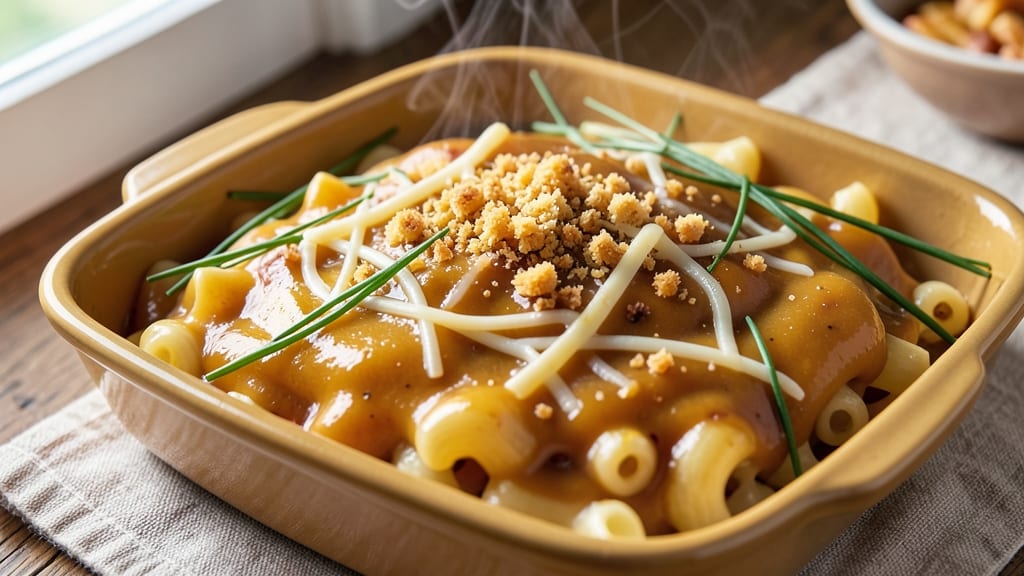
Annie's mac and cheese sauce delivers that signature ultra-smooth, velvety texture without any egg-based tricks. The secret lies in a proper roux and precise cheese ratios that create an emulsion so rich it clings to every noodle.
I've perfected this version after years of testing—no lumps, no separation, just that perfect cheddar zing that makes this sauce restaurant-quality.
What sets this sauce apart is the technique: cooking the butter and flour to a deep golden color before gradually whisking in warm milk creates a silky base that handles cheese beautifully. Sharp cheddar provides that signature tang, while a touch of cream cheese adds velvety depth.
The sauce thickens just enough to coat perfectly without being gluey, giving you that ideal balance of creaminess and bite.
This emulsion stays smooth even when reheated, making it ideal for meal prep or serving as a dipping sauce. The flavor builds complexity as it sits, with the cheddar's sharpness cutting through the richness.
Once you try this version, you'll never settle for boxed mac and cheese sauce again—the difference is that dramatic.
Perfect for baking under pasta, serving as a side, or even as a creamy soup base. The recipe delivers on every promise: ultra-smooth texture, sharp cheddar flavor, and professional-quality results without any shortcuts. Let's make this sauce—the foundation of perfect mac and cheese.
Ingredients for annie's mac and cheese sauce
Ten ingredients, zero lumps—just velvety perfection that clings to every noodle.
| Ingredient | Amount | Notes |
|---|---|---|
| Unsalted Butter 🧈 | ½ cup | Cold, cubed for roux |
| All-Purpose Flour 🌾 | ½ cup | Sifted for smooth sauce |
| Sharp White Cheddar Cheese 🧀 | 2 cups | Shredded, not pre-shredded |
| Cream Cheese 🧀 | 4 oz | Full-fat for richness |
| Whole Milk 🥛 | 2 cups | Warmed to 180°F |
| Heavy Cream 🥛 | ½ cup | For velvety texture |
| Yellow Mustard 🍯 | 1 tbsp | Dijon or prepared |
| Kosher Salt 🧂 | 1 ½ tsp | Diamond Crystal preferred |
| Ground Black Pepper 🌶️ | ½ tsp | Freshly ground |
| Garlic Powder 🧄 | ½ tsp | For subtle depth |
The butter and flour are your foundation. European-style butter like Plugrá or Land O'Lakes makes the roux silkier, but any unsalted will work. Cook it low and slow—golden brown, not burnt—or you'll taste the flour. The cheddar is non-negotiable: sharp white cheddar like Cabot or Tillamook gives that signature tang. Pre-shredded cheese has anti-caking agents that ruin the emulsion, so grab a block and shred it yourself. Pro tip: Use a microplane for ultra-fine shreds that melt like butter.
No sharp cheddar? Pepper jack or smoked Gouda add different but delicious depth. Running short on butter? Olive oil works in a pinch (use the same amount), though it'll be slightly less rich. The mustard is key—it's what keeps this sauce from curdling when reheated. Dijon or prepared both work, but skip the spicy versions. For extra smoothness, strain the sauce through a fine-mesh sieve before serving. And yes, you can make this dairy-free with nutritional yeast and coconut milk, but trust me on the full-fat version for that restaurant-quality texture.
This sauce gets better as it sits—30 minutes at room temp lets the flavors meld. Store in the fridge for 5 days or freeze for 3 months (portion into ice cube trays for single servings). Reheat gently over low heat, stirring constantly. The secret to no lumps? Whisk like you mean it—immersion blender is your friend if you're lazy. And for the love of mac and cheese, don't skip the pepper. That's what cuts through the richness and makes it sing.
Why You'll Love This Recipe
- Five-Ingredient Magic: I swear, this sauce comes together with just butter, flour, cheddar, cream cheese, and milk—no fancy gadgets or last-minute grocery runs. Honestly, I keep a box of each in my pantry just for this.
- Creamy-Crisp Balance: That sharp white cheddar melts into a velvety sauce while the roux gives it a subtle, satisfying bite—like a hug in every bite. Between us, the cream cheese takes it from good to "why didn’t I think of this sooner?"
- Leftover Goldmine: Make a double batch, and you’ve got dinner for two nights or a freezer stash for lazy Sundays. I reheat it with a splash of milk to keep it silky, and it’s still better than takeout.
- Budget Weeknight Win: Sharp cheddar and cream cheese stretch further than you’d think, and the milk keeps it rich without breaking the bank. It’s my go-to when I’m too tired to order in but still want something that feels special.
Step-by-step instructions for Annie's mac and cheese sauce
Here's how to create a velvety, ultra-smooth sauce that delivers that signature Annie's brand cheesy perfection.
Create the Perfect Roux
In a heavy-bottomed saucepan, melt the 0.5 cup unsalted butter over medium-low heat. I like to use cold, cubed butter so it melts gradually and doesn't burn. Once fully melted, add the 0.5 cup all-purpose flour all at once and whisk vigorously for 1-2 minutes until the mixture turns a light golden brown color.
This roux is the foundation of our sauce—it needs to be fully cooked to remove the raw flour taste while developing a nutty flavor. You'll know it's ready when it smells toasty and leaves a thin coating on the back of a spoon. Be patient here; rushing this step leads to a floury, gritty sauce instead of our silky emulsion.
Whisk in Warm Milk Gradually
Slowly pour in the 2 cups whole milk while whisking continuously to prevent lumps. I like to pour it in a thin stream, whisking constantly to create a smooth paste. Once all the milk is incorporated, increase the heat to medium and continue whisking for 5-7 minutes until the mixture thickens and coats the back of a spoon.
Here's the thing—you want to see the sauce cling to the whisk for a few seconds before it slides off. If it's too thick too soon, add a splash of milk to loosen it. This gradual thickening ensures our sauce will be lusciously smooth rather than gluey. Keep whisking vigorously to prevent any bits from forming at the bottom.
Add Cheeses and Create the Emulsion
Reduce the heat to low and begin adding the 2 cups sharp white cheddar cheese and 4 oz cream cheese in small batches. I like to add about ¼ cup of cheese at a time, whisking vigorously between each addition until fully melted. The cream cheese will make the sauce extra rich and velvety.
This is where the magic happens—the cheese should melt completely into the sauce, creating that signature ultra-smooth texture. If you see any unmelted cheese, reduce the heat slightly and keep whisking. The sauce should now be thick but still pourable. This is our base, and it's ready for the finishing touches that make it truly special.
Finish with Flavor Boosters
Remove the saucepan from heat and stir in the 0.5 cup heavy cream, 1 tbsp yellow mustard, 1.5 tsp kosher salt, 0.5 tsp ground black pepper, and 0.5 tsp garlic powder. The mustard adds a subtle tang that balances the richness, while the garlic powder provides depth without overpowering. The heavy cream gives us that luxurious, velvety texture we're after.
Give everything a final whisk to ensure all the seasonings are evenly distributed. Taste and adjust the seasoning if needed—sometimes you need a bit more salt to really bring out the cheddar's sharpness. The sauce should be perfectly seasoned and ready to coat your pasta beautifully.
Keep Warm and Use Immediately
Return the sauce to low heat and stir occasionally to maintain its smooth consistency. The key here is to keep it warm but not simmering—this prevents the cheese from separating. Annie's sauce is best when used immediately, so have your pasta cooked and ready to go.
When you're ready to serve, pour the sauce over your cooked pasta and toss gently. The sauce should coat every strand beautifully, creating that iconic, creamy blanket. If it starts to thicken too much while serving, simply whisk in a splash of warm milk to loosen it back up to your desired consistency.
Pro Tips For Making Annie'S Mac And Cheese Sauce
- Whisk Like You Mean It: When you melt butter and add flour, don’t just stir—whisk aggressively for 2-3 minutes until it’s a smooth, pale roux. I learned this the hard way after my sauce turned gray and tasted like regret. The extra effort prevents lumps and gives that rich, velvety texture.
- Grate Cheese Fresh: Pre-shredded cheese has anti-caking agents that make your sauce grainy. Use a box grater for sharp white cheddar—it melts smoother and tastes fresher. (Yes, it takes 2 minutes, but your sauce will thank you.)
- Temper the Cream Cheese: Don’t just dump cold cream cheese into hot sauce—it’ll clump like a science experiment gone wrong. Warm the milk first, then mix in softened cream cheese until fully melted. This keeps the sauce silky, not gloppy.
- Simmer, Don’t Boil: Keep the sauce at a gentle simmer (tiny bubbles, occasional swirls) for 5-7 minutes after adding milk. Boiling it turns the roux rubbery and the cheese stringy. Patience here makes all the difference—trust me, I’ve ruined batches by rushing.
Storing and reheating this dish
Refrigerator Storage
Let your sauce cool to room temperature (about 30 minutes) before transferring to an airtight container—I swear by glass Pyrex with snap-on lids for best results.
Store in the fridge for up to 5 days, though I find the flavor actually improves after 24 hours as the cheddar sharpness develops. The mustard helps prevent curdling during storage, so you won’t wake up to a grainy mess. 🧊
Freezer Prep Tips
For long-term storage, portion the sauce into quart-sized freezer bags or silicone ice cube trays (perfect for single servings). Leave ½-inch headspace since the sauce expands slightly when frozen.
Label with the date—it keeps beautifully for 3 months without texture loss. The heavy cream helps maintain that velvety consistency even after freezing. 📅
Stovetop Reheating
My preferred method is gentle reheating on the stovetop. Transfer the chilled sauce to a saucepan and warm over low heat, stirring constantly with a whisk or immersion blender to prevent lumps.
Add 1-2 tablespoons of warm milk or heavy cream if the sauce thickens too much. Keep it below 160°F to avoid breaking the emulsion. This method preserves that restaurant-quality smoothness. 🔥
Microwave Revival
For quick reheating, transfer sauce to a microwave-safe bowl and heat in 30-second intervals on 50% power, stirring vigorously between each interval. The goal is to reach 160°F without overheating.
If it looks dry, add a splash of warm milk and stir until silky again. This method works in a pinch, though I always prefer the stovetop for best texture. ⏱️
Thawing Sauce
Thaw overnight in the fridge for best results, or use the microwave's defrost setting for a quicker approach. Once thawed, stir in 1 tablespoon of warm milk or cream to restore that velvety consistency.
Never refreeze sauce that's been thawed—this can compromise the texture and safety. The mustard in the recipe helps maintain stability during thawing too. ❄️
Sauce Consistency Fixes
If your reheated sauce is too thick, whisk in 1 tablespoon of warm milk or cream at a time until you reach your desired consistency. For a thinner sauce, add a splash of warm water or broth.
If it separates slightly, whisk vigorously over low heat until smooth again. The key is patience—rushing this step can lead to lumps or graininess. 💡
Nutrition facts
Frequently asked questions
Why does Annie's sauce stay so smooth without eggs?
The secret lies in the roux technique and cheese ratios. Cooking the butter and flour to a golden brown removes raw flour taste while creating a silky base that emulsifies beautifully with the cheese. The cream cheese and mustard act as natural stabilizers, preventing separation without needing eggs. This creates that signature velvety texture that clings perfectly to pasta.
Can I make this sauce dairy-free?
Yes, but with adjustments! Replace the butter with olive oil or vegan butter, the milk with unsweetened almond or oat milk, and the cheeses with nutritional yeast (2 tbsp) + vegan cheddar (2 cups). Use cashew cream (blend soaked cashews with water) for richness. The texture will be slightly different but still delicious. For best results, strain the sauce through a fine-mesh sieve.
What's the best way to fix lumpy sauce?
If you see lumps, immediately remove from heat and use an immersion blender to smooth it out. If that's not available, whisk vigorously while adding 1 tablespoon of warm milk or cream at a time. For stubborn lumps, strain the sauce through a fine-mesh sieve. The key is patience—don't let the sauce boil or it'll separate completely. Prevention tip: Whisk constantly when adding cheese!
How can I make this sauce extra creamy?
For maximum creaminess, add 2 extra tablespoons of heavy cream or replace ½ cup of milk with whole milk. Another trick is to whisk in 1 tablespoon of cold butter at the end for a richer finish. For a decadent version, fold in ¼ cup of sour cream just before serving. The cream cheese already provides velvety texture, but these tweaks take it to the next level.
Is this sauce good for baking under pasta?
This recipe is perfect for baked mac and cheese. After tossing the sauce with pasta, transfer to a baking dish and top with breadcrumbs or extra cheese. Bake at 375°F for 15-20 minutes until bubbly and golden. The sauce's emulsion holds up beautifully during baking, giving you that creamy, gooey texture we all love. Just watch closely to prevent over-browning.