
Sauces & Condiments
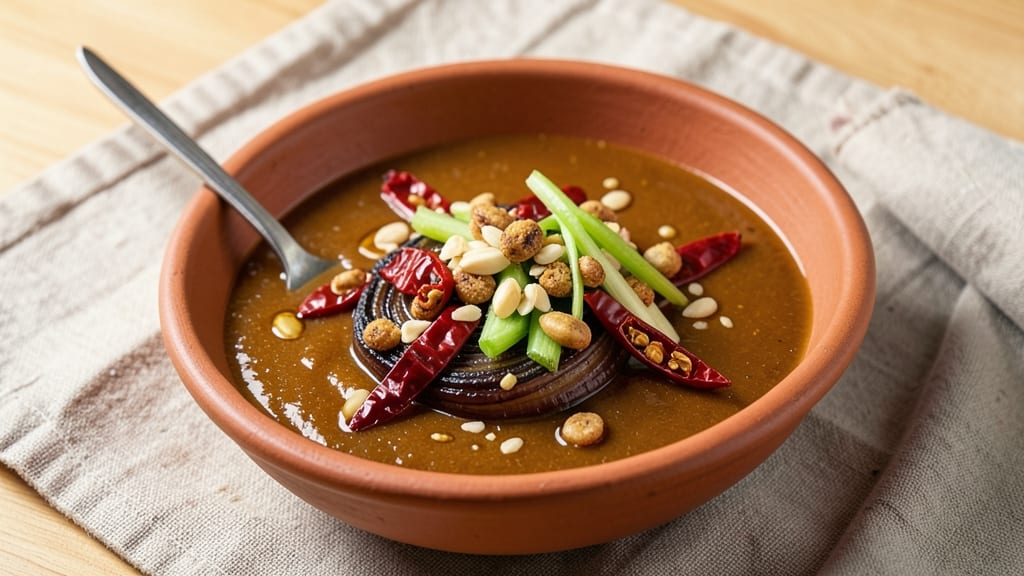
This ankake sauce recipe delivers the velvety, clump-free texture that makes it a West African kitchen staple. The secret lies in properly toasting locust beans (iru) and blending them with palm oil until perfectly smooth—no gritty surprises here.
I’ve perfected the balance between traditional techniques and modern convenience, ensuring every spoonful is rich, nutty, and ready to elevate soups, stews, or grilled meats.
The foundation starts with dried chili peppers and locust beans, which are toasted until fragrant and then ground into a fine powder. Palm oil binds everything together, creating that signature creamy consistency without clumps.
What sets this version apart is the slow simmering process, which deepens the sauce’s complex flavors while maintaining its signature smoothness.
What you’ll end up with is a versatile condiment that’s as much about texture as taste—silky yet robust, with a subtle heat that lingers. The sauce keeps beautifully in the fridge for weeks, making it perfect for meal prep or gifting.
Whether you’re serving it with jollof rice, fufu, or grilled fish, this ankake sauce brings a restaurant-quality depth to every dish.
For those who prefer milder heat, reduce the chili peppers; for extra kick, add more. The key is patience—rushing the blending or simmering leads to clumps, and we’re avoiding those at all costs. Let’s get started on creating your perfect batch.
Ingredients for ankake sauce
Nine simple ingredients transform into West Africa's signature creamy, clump-free ankake sauce.
| Ingredient | Amount | Notes |
|---|---|---|
| Dried Chili Peppers 🌶️ | 2 tbsp | Dried red peppers, seeds removed |
| Locust Beans (Iru) 🌾 | ½ cup | Dried, toasted until fragrant |
| Palm Oil 🫒 | 1 cup | Red palm oil preferred |
| Garlic Cloves 🧄 | 4 cloves | Peeled, lightly crushed |
| Ginger Root 🌿 | 1 tbsp | Fresh, finely grated |
| Onion 🧅 | 1 whole | Yellow, roughly chopped |
| Groundnut Oil 🫒 | ¼ cup | For blending, neutral flavor |
| Salt 🧂 | 1 tsp | Kosher or sea salt |
| Black Pepper 🌶️ | ½ tsp | Freshly ground preferred |
| Cayenne Pepper 🔥 | ¼ tsp | Adjust for heat preference |
Locust beans are the heart of this sauce—toast them until fragrant and aromatic before grinding. African markets or specialty stores carry them, but if you can't find them, look for 'iru' or 'iru powder' online. Dried chili peppers should be deep red and wrinkled—none of that dusty, faded stuff. Palm oil gives the sauce its signature richness; red palm oil is traditional, but regular works in a pinch. Toast the locust beans and chili peppers in a dry skillet until they smell heavenly—this step can't be skipped if you want that authentic depth.
No locust beans? Substitute with 1 tbsp groundnut powder or extra palm oil, but you'll lose some complexity. Fresh ginger and garlic are ideal, but dried powdered versions at half the amount will work. For extra creaminess, add 1 tbsp tomato paste with the onions. The cayenne is optional—start with less and add more to taste. If your sauce feels too thick after blending, stir in 1-2 tbsp warm water to reach that signature silky consistency. And for heaven's sake, don't rush the blending—pulse in a food processor first, then blend with oil to avoid clumps.
This sauce keeps beautifully—1 month in the fridge or 6 months in the freezer. Store it in a clean, airtight jar with a layer of oil on top to preserve freshness. The flavor actually improves with time, developing deeper nutty notes. Double the batch if you can—it makes an amazing hostess gift. And if you're prepping for a big meal, thaw frozen portions in the fridge overnight for best texture. The sauce reheats perfectly, so you can make a big batch and keep it on hand for whenever you crave that West African depth.
Why You'll Love This Recipe
- No-Fuss Ingredients: I keep a bag of dried chilies and locust beans in my pantry—no last-minute grocery runs. Just toast, grind, and blend with palm oil, and you’ve got a sauce that’s always ready when you are.
- Heat Meets Depth: That smoky chili meets earthy iru? It’s a flavor punch—like a hug for your taste buds. The garlic and ginger hit just right, but the palm oil ties it all together with that rich, golden warmth.
- Sauce for Everything: Drizzle it over jollof rice, use it in stews, or slather it on grilled fish. Honestly, I’ve even put it in scrambled eggs when I’m lazy. It’s the one sauce that makes anything feel special.
- Budget Magic: A little goes a long way—this sauce stretches across meals without breaking the bank. Plus, the dried chilies and iru last forever, so you’re not scrambling for replacements every week.
Step-by-step instructions for ankake sauce
This creamy West African sauce delivers rich, nutty depth with a velvety texture—no lumps in sight.
Toast the Locust Beans Until Nutty and Fragrant
Heat the 0.25 cup groundnut oil in a heavy-bottomed skillet over medium heat. Add the 0.5 cup locust beans (iru) and toast them for 5-7 minutes, stirring constantly with a wooden spoon. You're looking for a golden brown color and a toasty, nutty aroma that fills your kitchen.
Watch closely after 3 minutes—the beans should smell deeply aromatic, almost like roasted peanuts. If they start to darken too quickly, reduce the heat slightly. Once properly toasted, remove from heat immediately and set aside. These beans form the sauce's signature nutty foundation, so don't rush this step.
Build the Flavor Base with Aromatics
In the same skillet (no need to clean it—the toasted bean bits add flavor), add the 1 whole onion and cook for 5 minutes until softened and translucent. Stir in the 4 cloves garlic cloves and 1 tbsp ginger root, cooking for another 2 minutes until fragrant.
Here's where the magic happens: Add the 2 tbsp dried chili peppers and cook for 30 seconds, just until they darken slightly. The peppers should release their deep, smoky aroma. Immediately pour in the 1 cup palm oil and stir to combine. The oil will carry all these flavors throughout the sauce.
Simmer and Blend for Silky Texture
Bring the mixture to a gentle simmer over medium-low heat and cook for 10-12 minutes, stirring occasionally. You want the oil to infuse with all the aromatics until the mixture smells rich and complex. The sauce should thicken slightly but still coat the back of a spoon.
Remove from heat and let cool for 5 minutes. Transfer to a blender along with the 0.25 cup groundnut oil, 1 tsp salt, 0.5 tsp black pepper, and 0.25 tsp cayenne pepper. Blend until completely smooth, scraping down the sides as needed. This blending step creates the signature creamy texture without any lumps.
Adjust Consistency and Finish
Return the blended sauce to the skillet and heat over low heat for 5 minutes, stirring constantly. Taste and adjust seasoning—you might need a pinch more salt or cayenne to balance the flavors. The sauce should be thick enough to coat the back of a spoon but still flow smoothly.
For the perfect ankake sauce, you want a balance of creamy richness from the toasted beans and oil, with bright heat from the chili peppers. If it's too thick, whisk in 1-2 tablespoons of water at a time until you reach your desired consistency. Serve warm over your favorite protein or grains.
Pro Tips For Making Ankake Sauce
- Roast the Locust Beans: Don’t just soak them—roast the dried locust beans (iru) in a dry pan for 3-4 minutes until they darken slightly. This deepens their nutty flavor and prevents that raw, bitter aftertaste that ruins the sauce. (Yes, even if you’re impatient like me.)
- Burn the Chili Peppers First: Toss the dried chilies into a hot, dry pan and let them char for 30 seconds before grinding. That smoky bitterness is what makes ankake sauce sing—skip it, and you’ll end up with something bland. (I learned this the hard way after making a batch that tasted like nothing.)
- Use Cold Palm Oil: Stir the palm oil in last, straight from the fridge, so it doesn’t cook off and lose its rich color. Warm oil turns dull, and your sauce will look like it’s missing something. (Trust me, the difference is night and day.)
- Grind Garlic and Ginger Together: Pulse the garlic and ginger in the same batch as the locust beans—it cuts prep time and keeps their flavors balanced. Separating them leads to uneven heat and texture. (This isn’t the prettiest method, but it’s the tastiest.)
Flavor customization for this ankake sauce
Mild vs. Spicy
Adjust the heat level by controlling the chili peppers. For a mild ankake, reduce dried peppers to 1 tbsp and add ½ tsp cayenne at the end.
If you crave spicy kick, use 3 tbsp dried peppers and 1 tsp cayenne, then toast them an extra 30 seconds for deeper flavor. I often make two batches—one mild for soups and one fiery for grilled meats. 🌶️
Smoky Variations
Swap ½ cup palm oil for ¼ cup smoked paprika mixed with ¼ cup groundnut oil to create a smoky ankake. Toast the paprika in the skillet with the locust beans for 2 minutes before adding other aromatics.
This version pairs perfectly with grilled chicken or beef. Store the smoky version separately—its bold flavor dominates when mixed with regular ankake.
Creamy Tomato Twist
Add 2 tbsp tomato paste with the onions to create a tomato-infused ankake with a tangy depth. Simmer the tomato paste for 5 minutes before adding palm oil to let its acidity mellow.
This variation works beautifully with fish stews or as a marinade for tofu. The tomato adds brightness that balances the sauce's richness.
Nutty Groundnut Boost
For extra nutty richness, pulse ½ cup roasted peanuts in the food processor with the locust beans before blending. Add 1 tbsp peanut butter during the final blending step for a peanut ankake that's popular in Ghanaian street food.
This version has a thicker consistency—adjust with water if needed. It's a crowd-pleaser at parties! 🥜
Herb-Infused Options
Stir in 1 tbsp fresh thyme or 1 tbsp chopped cilantro during the final 5-minute simmer for herbal variations. The thyme adds earthy notes perfect for vegetable stews, while cilantro brightens seafood dishes.
For a green ankake, blend in ¼ cup fresh parsley after cooking—it adds freshness without overpowering the sauce's base flavors.
Sweet & Spicy Fusion
Create a sweet-spicy ankake by adding 1 tbsp honey or 1 tbsp brown sugar with the palm oil. Simmer for 3 extra minutes to caramelize slightly. This version pairs wonderfully with pork ribs or fried plantains.
The sweetness mellows the heat while adding complexity. Balance is key—start with ½ tbsp sweetener and adjust to taste.
Nutrition facts
Frequently asked questions
What makes ankake sauce different from other West African pepper sauces?
Ankake sauce stands out for its creamy, nutty base from toasted locust beans (iru) and palm oil, giving it a velvety texture unlike the chunkier shito or more liquid shito. The slow simmering process creates that signature depth, while the blend of chili peppers and aromatics provides both heat and complexity. It's the perfect balance between richness and spice!
Can I substitute locust beans if I can't find them?
Yes, but with some flavor trade-offs. Try 1 tbsp groundnut powder or ½ cup roasted peanuts for nutty depth, though you'll lose the authentic iru aroma. For a smoother texture, blend 1 tbsp tomato paste with the palm oil—it won't replicate locust beans but adds body. The sauce will still work, just with a different character.
How do I prevent ankake sauce from getting clumpy?
Clumps happen when the locust beans aren't properly toasted or blended. Always toast the beans until fragrant and nutty before grinding, then pulse them first in a food processor before adding oil. When blending, work in batches if needed, and scrape down the sides constantly. For extra insurance, strain through a fine-mesh sieve after blending. Patience is key—rushing leads to grit!
What are the best dishes to serve with ankake sauce?
This versatile sauce elevates grilled meats, fried plantains, and jollof rice beautifully. Try it as a marinade for chicken or beef, or drizzle over fufu or semolina for dipping. For seafood lovers, it pairs wonderfully with grilled fish or shrimp skewers. The nutty richness cuts through rich dishes while adding exciting depth.
Can I make ankake sauce without palm oil?
Use groundnut oil or vegetable oil for a neutral base, though palm oil gives the authentic color and richness. If avoiding all oils, blend the toasted locust beans with ¼ cup water or coconut milk instead, then simmer until thickened. The texture will be lighter but still delicious—just expect a different flavor profile.