
Sauces & Condiments
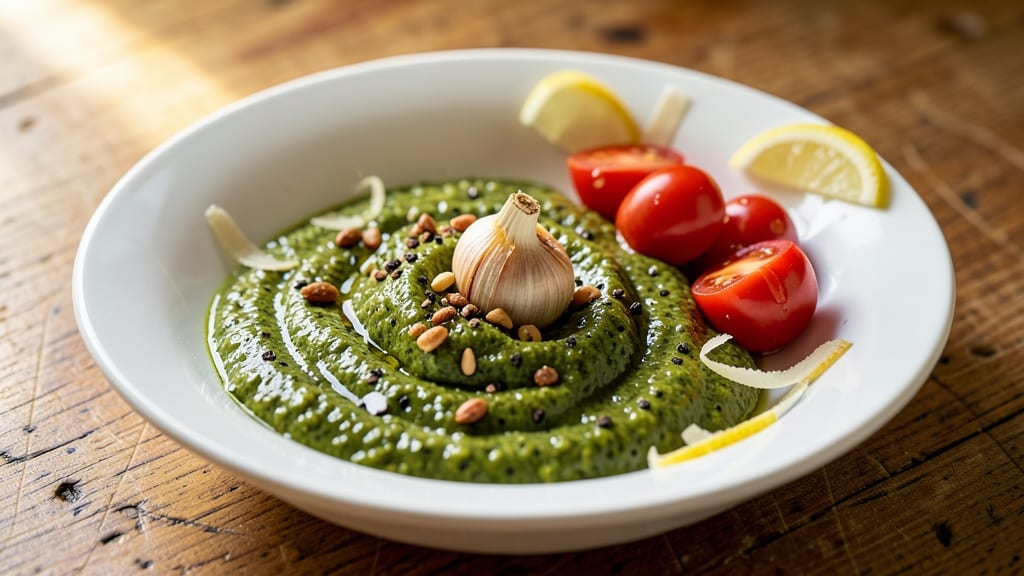
Alton Brown's pesto sauce transforms fresh basil into a vibrant, nutty masterpiece that elevates any dish. This vegetarian version blends garlic, pine nuts, and parmesan with a modern emulsification technique for silky-smooth texture. The result is a sauce that's both restaurant-quality and effortlessly homemade—perfect for pasta, sandwiches, or dipping.
What makes this recipe special is its balance of bold flavors and foolproof method, ensuring every batch delivers that signature Alton Brown touch.
The foundation of this pesto lies in its ingredients: fresh basil, toasted pine nuts, garlic, and high-quality olive oil.
I use a food processor to blend everything into a thick, vibrant green paste, but the real magic happens when I add a splash of cold water to create a stable emulsion. This technique prevents separation and gives the sauce that luxurious, velvety consistency.
The addition of grated parmesan adds depth, while lemon juice brightens the overall flavor profile. With just 10 minutes of prep time, you'll have a sauce that tastes like it came from a high-end restaurant.
What sets this recipe apart is its versatility—it works as a pasta sauce, sandwich spread, or marinade, and it keeps well in the refrigerator for up to a week. The emulsification method ensures the sauce stays creamy and cohesive, even after refrigeration.
Whether you're a seasoned cook or a beginner, this pesto sauce is a game-changer for adding fresh, vibrant flavors to your meals. The nutty, herby taste pairs beautifully with a variety of dishes, making it a staple in any kitchen.
For those looking to customize, you can swap pine nuts for walnuts or almonds, or even use toasted breadcrumbs for a gluten-free option. The key is maintaining the balance of flavors, so adjust the garlic and lemon to taste.
This recipe is not only delicious but also a great way to use up fresh basil from your garden or farmers' market. Let's get started on creating your own batch of nutty green magic!
Ingredients for alton brown pesto sauce
Fresh basil, nutty pine nuts, and rich olive oil—this is the vibrant lineup for Alton Brown's signature pesto.
| Ingredient | Amount | Notes |
|---|---|---|
| Fresh Basil Leaves 🌿 | 2 ½ cups | Bright green, stems removed |
| Toasted Pine Nuts 🥜 | ½ cup | Lightly browned in dry pan |
| Garlic Cloves 🧄 | 3 whole | Peeled, roughly chopped |
| Extra-Virgin Olive Oil 🫒 | ¾ cup | High-quality, fruity variety |
| Freshly Grated Parmesan Cheese 🧀 | ¾ cup | From a fresh wedge |
| Fresh Lemon Juice 🍋 | 1 tbsp | From 1 small lemon |
| Sea Salt 🧂 | ½ tsp | Fine grain preferred |
| Freshly Ground Black Pepper 🌶️ | ¼ tsp | Adjust to taste |
| Cold Water 💧 | 1 tbsp | For emulsification |
The basil is non-negotiable here—farmers market quality makes all the difference. Look for leaves that are deep green, not yellowing at the edges, and smell fresh like you're standing in a garden. Trader Joe's has great organic basil when you can't hit the market, but avoid the sad plastic containers at regular grocery stores. Toast the pine nuts in a dry pan until they're just golden—no oil needed. They'll release their nutty aroma, which is half the flavor. For the Parmesan, skip the pre-grated stuff—it's full of anti-caking agents and melts poorly. Grate your own from a wedge, and if you're feeling fancy, use a microplane for the finest texture. The olive oil should be something you'd drizzle on bread—none of that cheap cooking oil.
No pine nuts? Walnuts or almonds work in a pinch, but toast them first for that same nutty depth. Short on basil? Stretch it with fresh parsley (up to half and half), but don't go overboard or the flavor changes. The garlic can be roasted for a sweeter taste—just wrap whole cloves in foil with a drizzle of olive oil and roast at 400°F for 10 minutes. For a vegan version, swap the Parmesan for nutritional yeast (it adds that umami kick without dairy). The emulsification water is key—use cold water to stabilize the sauce and prevent separation. If your pesto ends up too thick, just add a splash more water until it's silky-smooth.
Pesto browns fast, so store it in a glass jar with a thin layer of olive oil on top—keeps it vibrant for up to 1 week in the fridge. For longer storage, freeze in ice cube trays and transfer to a bag—6 months of flavor locked in. I always make a double batch because it disappears faster than you'd think. Use it on pasta, sandwiches, or even as a marinade for chicken (though this is a vegetarian recipe!). The emulsification trick means it won't separate, even after chilling. Trust me on that—no sad, oily pesto here.
Why You'll Love This Recipe
- No Pulse Needed: I’ll be honest—this pesto comes together in three minutes with a food processor. No chopping, no stress, just pulse those basil leaves, garlic, and pine nuts until it’s smooth but still has texture. That’s the magic: effortless, but it doesn’t taste like you skipped steps.
- Umami Bomb: Between us, the toasted pine nuts and freshly grated Parmesan hit different. The garlic adds a sharp punch, but the olive oil ties everything into this creamy, bright, ridiculously savory sauce. It’s the kind of flavor that makes you pause mid-bite—like, “Wait, how is this so good?”
- Pasta’s Best Friend: This isn’t just for pasta—it’s my go-to for toast, grilled chicken, roasted veggies, or even a quick sandwich. Honestly, I’ve used it in everything from weeknight dinners to Sunday brunch. The best part? It’s flexible enough to play the star or the supporting player without overpowering.
- Leftovers That Don’t Suck: Store it in the fridge for up to a week, and it only gets better. The flavors meld, the pine nuts stay crunchy, and it’s still vibrant green. I make a double batch because it’s cheaper than buying jars, and I always have something delicious on hand for last-minute meals. No waste, all win.
Step-by-step instructions for Alton Brown's pesto sauce
This classic pesto comes together faster than you can say "nutty green magic."
Toast the Pine Nuts for Maximum Flavor
Heat a dry skillet over medium-low heat and add the 0.5 cup toasted pine nuts. Stir constantly for 3-4 minutes until they turn a light golden brown and smell nutty. Watch them like a hawk—pine nuts burn faster than you think. Remove from heat immediately once toasted and let cool for 2 minutes before using.
This toasting step is non-negotiable. Raw pine nuts taste bland and don't develop that beautiful crunch. If you hear them popping too loudly or see smoke, you've gone too far. Transfer the toasted nuts to a small bowl to keep them warm while you prep the rest.
Pulse Basil, Garlic, and Parmesan in Food Processor
In a food processor, combine the 2.5 cups fresh basil leaves, 3 whole garlic cloves, and 0.75 cup freshly grated Parmesan cheese. Pulse 8-10 times until everything is finely chopped but not completely pureed. You want a chunky texture—this is what gives pesto its authentic character.
Don't skip this step. If you blend too long, you'll end up with a paste instead of a vibrant, textured sauce. Stop when you can still see visible basil pieces and garlic flecks. Scrape down the sides of the processor bowl with a spatula to ensure even processing.
Gradually Add Olive Oil and Seasonings
With the processor running, slowly drizzle in the 0.75 cup extra-virgin olive oil over 20-30 seconds. This gradual addition prevents the processor from seizing up and ensures proper emulsification. Once the oil is incorporated, add the 0.5 tsp sea salt and 0.25 tsp freshly ground black pepper, then pulse 3-4 more times to combine.
This is where the magic happens. The olive oil carries the flavors and creates that signature creamy texture. If the mixture looks too thick, we'll fix that in the next step. Taste a small spoonful—you should notice the bright basil, nutty garlic, and salty Parmesan all working together.
Emulsify with Cold Water for Perfect Consistency
Add the 1 tbsp cold water and the 1 tbsp fresh lemon juice to the processor. Pulse 5-6 times until the pesto reaches a smooth, spreadable consistency. If it's still too thick, add 1 teaspoon cold water at a time until it reaches your desired texture—it should coat the back of a spoon but still hold its shape.
The cold water is key here. It helps emulsify the sauce and prevents it from separating. The lemon juice brightens all the flavors and balances the richness. Give it one final taste—it should be vibrant, tangy, and perfectly balanced between nutty, herby, and salty.
Store Properly for Maximum Freshness
Transfer the pesto to a clean jar or airtight container. Press a piece of plastic wrap directly onto the surface to prevent oxidation. Store in the refrigerator for up to 5 days, or freeze for up to 3 months. When ready to use, give it a quick stir—it might thicken slightly when refrigerated, so add a splash of water or olive oil to loosen it.
This sauce is incredibly versatile—toss with pasta, spread on sandwiches, or mix into soups. The key to great pesto is fresh ingredients and proper storage. If you notice any separation, just give it a good stir before using. Enjoy your homemade nutty green magic!
Pro Tips For Making Alton Brown Pesto Sauce
- Toast Nuts Low: I learned this the hard way—pine nuts burn faster than you’d think. Use a cool skillet (medium-low heat) and watch them like a hawk, stirring every 10 seconds. They’re done when they’re just golden, not brown—overcooked nuts taste bitter, and that’s a waste of good pesto.
- Pulse, Don’t Blend: Alton’s recipe calls for a food processor, but I used to over-blend and end up with a sad, mushy paste. Pulse in short bursts (3-4 seconds at a time) until it’s just combined—you want texture, not a smoothie. Stop when it still looks slightly chunky.
- Grate Parmesan Fresh: Pre-shredded cheese has anti-caking agents that ruin pesto’s vibrancy. Grab a microplane or fine grater and work fast—it packs down quickly. Use about 1 cup for the recipe, but don’t skimp; the cheese is what ties everything together.
- Add Oil Slowly: Drizzle in the olive oil in stages (start with ½ cup) while pulsing the basil and nuts. Too much at once makes the mixture greasy and watery. You’re aiming for a thick, spreadable consistency—like hummus, not soup.
Storing and reheating your alton brown pesto sauce
Refrigerator Storage
Store your pesto in an airtight glass jar with a thin layer of extra-virgin olive oil (about ¼ inch) pressed directly onto the surface. This protective layer prevents oxidation and keeps the vibrant green color intact. I like using Ball mason jars because they seal tightly and stack neatly.
Keep it refrigerated at 40°F or below for up to 5 days—the flavors actually deepen as the ingredients meld together. Always press plastic wrap directly onto the surface before sealing to minimize air exposure. 💧
Freezer Preservation
For longer storage, freeze pesto in ice cube trays—fill each compartment halfway, cover with a thin layer of olive oil, then transfer the cubes to a freezer bag once solid. This method preserves texture and prevents freezer burn.
Label the bag with the date, as pesto maintains peak quality for 3 months in the freezer. When ready to use, thaw in the fridge overnight and stir in 1 tsp water or olive oil to restore consistency. I freeze in 2-tablespoon portions for perfect single-use servings. ❄️
Reheating Techniques
For refrigerator-stored pesto, give it a good stir before using—it may thicken slightly. If needed, thin with 1-2 tsp cold water or olive oil until smooth. Never microwave pesto, as the heat can break the emulsion and create separation.
Instead, stir in 1 tsp warm water while mixing vigorously to restore its creamy texture. The emulsification trick from the recipe ensures it stays cohesive even after chilling. 🔥
Reviving Separated Pesto
If you notice separation after refrigeration, don't toss it! Simply add 1 tsp cold water and mix vigorously with a fork or whisk. The cold water helps re-emulsify the sauce. For stubborn separation, add ½ tsp Dijon mustard—its emulsifying properties work wonders.
This technique saves perfectly good pesto that might otherwise go to waste. The key is acting quickly before the oil and water fully separate. ✨
Portion Control Tips
Make pesto in small batches (like ½ cup) if you won't use it all within 5 days. Smaller portions reheat better and maintain freshness longer. I keep a small ramekin in the fridge just for pesto, making it easy to grab and use without transferring larger containers.
For leftovers, portion into 1-tablespoon servings on a silicone baking mat before freezing—this makes it perfect for single-use applications like pasta or sandwiches. 🍽️
Nutrition facts
Frequently asked questions about Alton Brown's pesto sauce
Can I make this pesto without a food processor?
Use a mortar and pestle for a more traditional approach. Start with the toasted pine nuts and garlic, then crush them into a paste. Add the basil and Parmesan, working in batches to avoid over-processing. Finish with the olive oil and lemon juice, mixing thoroughly. The texture will be slightly chunkier but still delicious.
What can I substitute for pine nuts?
Try walnuts or almonds for a budget-friendly option—just toast them first for maximum flavor. For a nut-free version, use toasted breadcrumbs or sunflower seeds. The key is maintaining the nutty depth, so adjust the amount slightly if using seeds (they're less dense).
Why does my pesto separate after refrigeration?
Separation happens when the emulsion breaks, usually from improper storage or heating. Always store it in an airtight container with a thin layer of olive oil on top. If separation occurs, whisk in 1 tsp cold water or Dijon mustard to restore the creamy texture. The emulsification trick in this recipe minimizes this issue.
How much pesto should I make for pasta?
For 1 pound of pasta, use about ¼ cup pesto. Toss it with the cooked pasta and finish with a splash of pasta water to help the sauce cling. For extra richness, reserve ½ cup pasta water before draining—it's liquid gold for emulsifying the sauce.
Can I make this pesto vegan?
Yes! Swap the Parmesan for ½ cup nutritional yeast and add 1 tbsp lemon juice for tang. For extra creaminess, blend in 2 tbsp silken tofu or avocado. The texture will be slightly different but still vibrant and flavorful.