
Sauces & Condiments
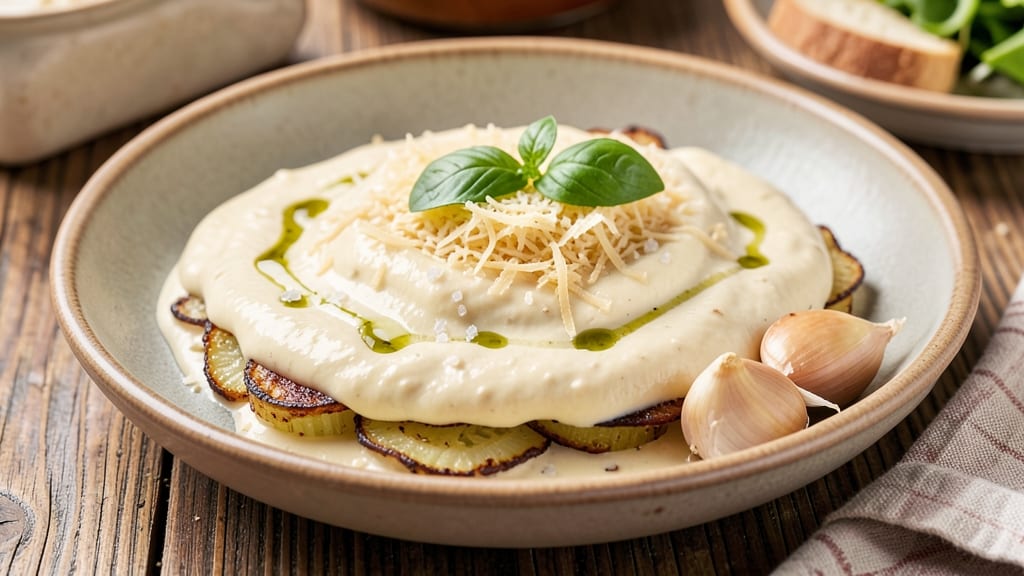
Mario Batali’s Alfredo sauce recipe delivers restaurant-quality richness with a velvety texture that clings perfectly to pasta. The secret lies in balancing butter, cream, and Parmesan while keeping the sauce silky smooth—no lumps or separation.
I’ve adapted his signature technique to include a celery crown crunch for texture, inspired by his love of bold, layered flavors.
This sauce starts with a slow, gentle reduction of butter and cream, preventing curdling while building depth. Freshly grated Parmesan adds nutty richness, while a touch of garlic (optional) enhances the umami.
The celery crown—thinly sliced and lightly fried—provides a crisp contrast that elevates every bite. It’s the kind of sauce that transforms simple fettuccine into an indulgent meal.
What sets this recipe apart is Mario Batali’s attention to detail: simmering the sauce just until it coats the back of a spoon, not boiling it dry. The result is a velvety, foolproof sauce that works for pasta, grilled chicken, or even as a dipping sauce.
No heavy cream substitutes or powdered cheese shortcuts—just pure, luxurious flavor.
For extra depth, finish with a splash of pasta water and a pinch of black pepper. Serve immediately over hot fettuccine, garnished with the crispy celery crown. This is the sauce that makes homemade pasta taste like it came from a high-end Italian trattoria. Let’s make it.
Ingredients for alfredo sauce recipe mario batali
Nine essential ingredients craft Mario Batali's velvety Alfredo sauce with celery crown contrast.
| Ingredient | Amount | Notes |
|---|---|---|
| Unsalted Butter 🧈 | ¾ cup | Cold, cut into 1-inch cubes |
| Heavy Cream 🥛 | 1 ½ cups | Full-fat for optimal richness |
| Freshly Grated Parmesan Cheese 🧀 | 1 ½ cups | Parmigiano-Reggiano preferred |
| Garlic Cloves 🧄 | 2 whole | Minced, optional for umami depth |
| Extra-Virgin Olive Oil 🫒 | 2 tbsp | For finishing, fruity variety |
| Diamond Crystal Kosher Salt 🧂 | ½ tsp | Adjust to taste |
| Freshly Ground Black Pepper 🌶️ | ¼ tsp | Light hand, freshly cracked |
| Celery Stalks 🥬 | 2 whole | Thinly sliced for crown |
| All-Purpose Flour 🌾 | 1 tbsp | For coating celery crown |
The butter and cream form the sauce's luxurious base—European-style unsalted butter (like Plugrá) adds nuanced flavor, while full-fat heavy cream ensures velvety texture. Parmigiano-Reggiano is non-negotiable for authentic depth; pre-grated contains anti-caking agents that ruin the sauce. For the celery crown, fresh, crisp celery from the market's produce section delivers the best crunch—avoid wilted stalks. The olive oil finish should be fruity and peppery, like California Gold or Bertolli.
No Parmesan? Pecorino Romano offers a sharper alternative, though it lacks the same nutty sweetness. Substituting heavy cream with half-and-half lightens the texture but reduces richness. For the celery crown, thinly sliced fennel provides a similar anise note. The garlic is truly optional—some purists omit it entirely, while others insist it's essential for umami. If using, mince it finely to avoid bitterness. The flour for coating is merely for crisping; cornstarch works equally well for a lighter texture.
Store the sauce in an airtight container with a thin layer of plastic wrap pressed directly on the surface to prevent skin formation. Keeps for 4-5 days in the refrigerator, though it's best enjoyed fresh. The celery crown loses crispness after 2 days, so fry it fresh before serving. For make-ahead convenience, prepare the sauce without the celery crown and reheat gently—add the crispy garnish just before serving to maintain texture. Freezes beautifully for up to 3 months when stored in a sealed container.
Why You'll Love This Recipe
- Five-Ingredient Magic: I swear, this sauce is the kind of recipe where you just look at the ingredients and think, "How hard can this be?" Butter, cream, Parmesan, garlic, olive oil—no fancy techniques, no last-minute grocery runs. The only real trick is grating that cheese fresh (yes, the boxed stuff won’t cut it here), but even that takes two minutes. Honestly, I’ve made this sauce after a long day with one hand tied behind my back, and it still comes out rich and velvety.
- Garlic Butter Bliss: That first sizzle of garlic in olive oil? It’s the moment this sauce becomes ridiculously good. Mario Batali’s version balances the boldness of raw garlic with the creamy depth of butter and Parmesan—no overpowering bitterness, just a warm, aromatic punch that makes every bite feel like a hug. Between us, I’ve ruined fancier sauces before, but this one forgives mistakes. (Yes, even when I burn the garlic.)
- Pasta Party Ready: This sauce isn’t just for fettuccine—it’s my go-to for quick weeknight dinners, last-minute date nights, or when my college-aged kids bring home friends. Toss it with roasted chicken, shrimp, or even grilled veggies, and suddenly you’re serving restaurant-quality food. I’ll be real: I’ve reheated leftovers for lunch the next day, and as long as you don’t let it sit too long, it’s still creamy and delicious. (Pro tip: Store it in a jar, not the fridge, to keep it from absorbing odors.)
- Budget-Friendly Luxury: Here’s what sold me—the cost. Heavy cream and Parmesan might sound fancy, but a single batch stretches to feed four (or two very hungry people) without breaking the bank. I make a double batch on Sundays, freeze half, and boom: instant fancy sauce for when I’m too tired to cook. Not the prettiest, but the taste makes up for it every time. Plus, using olive oil instead of butter for the garlic? That little swap keeps it from getting greasy while adding brightness. Smart, simple, and satisfying.
Step-by-step instructions for Mario Batali's Alfredo sauce
Here's the method for velvety perfection with that signature celery crown crunch.
Create the Celery Crown for Texture
Slice the 2 whole celery stalks into thin rounds—about ⅛-inch thick. Toss them immediately with the 1 tablespoon all-purpose flour and a pinch of the 0.5 teaspoon Diamond Crystal kosher salt to coat evenly. This step prevents sogginess and adds that signature crunch.
Spread the floured celery on a parchment-lined baking sheet in a single layer. Roast at 375°F for 10-12 minutes until golden brown and crisp at the edges. Watch closely—they burn quickly once they reach color. Remove and set aside, reserving the pan for the sauce.
Build the Rich Cream Base
In the same roasting pan (no need to clean it—the browned bits add depth), melt the 0.75 cup unsalted butter over medium heat. Once foaming subsides, add the 2 whole minced garlic cloves and sauté for 30 seconds until fragrant but not browned. This prevents bitterness while infusing the sauce.
Pour in the 1.5 cups heavy cream and bring to a gentle simmer. Let it reduce by about one-third—this takes 5-7 minutes—until the mixture thickens slightly and coats the back of a spoon. The sauce should look like heavy cream, not watery. If it thickens too quickly, whisk in 1 tablespoon hot water to adjust consistency.
Incorporate the Cheese for Velvety Texture
Reduce heat to low and gradually whisk in the 1.5 cups freshly grated Parmesan cheese in small additions. This slow incorporation prevents clumping and ensures a silky finish. The cheese should melt completely, creating a smooth, glossy sauce. If the sauce looks too thick, add another 1 tablespoon hot water to loosen it.
Season immediately with the remaining 0.5 teaspoon kosher salt and 0.25 teaspoon freshly ground black pepper. Taste and adjust—this sauce should be rich but balanced, not overpowering. Keep the sauce warm over low heat while you prepare your pasta.
Finish with Olive Oil for Balance
Just before serving, drizzle in the 2 tablespoons extra-virgin olive oil and stir gently. This step adds a bright, fruity note that cuts through the richness of the cheese and cream. The oil should be fully incorporated but not emulsified—just enough to coat the sauce lightly.
Toss the sauce with cooked pasta and top with the reserved crispy celery crown. The contrast between the velvety sauce and crunchy celery is what makes this sauce truly special. Serve immediately while the celery remains crisp and the sauce stays warm.
Pro Tips For Making Alfredo Sauce Recipe Mario Batali
- Low and Slow for Cream: Don’t boil the heavy cream—simmer it gently over medium-low heat until it’s hot but not rolling. I learned this the hard way: once I let it bubble, the sauce broke into a greasy mess. Keep it moving with a wooden spoon, and if it starts to thicken too fast, pull it off the heat for 10 seconds.
- Grill the Garlic First: Toast the minced garlic in olive oil over medium heat until it’s golden and fragrant—about 2 minutes. This deepens the flavor way more than raw garlic ever could. Just don’t walk away; burned garlic ruins everything.
- Use a Microplane for Parmesan: Skip the boxed grated cheese—it’s full of starch and turns the sauce grainy. A microplane gives you fresh, fine shavings that melt into the sauce smoothly. If you don’t have one, grate it yourself and press it through a sieve to catch any clumps.
- Salt the Butter: Unsalted butter needs seasoning, and this sauce relies on it. Taste the melted butter before adding cream—if it’s bland, add a pinch of salt now. You’ll thank yourself later when the sauce isn’t flat.
Best sauces and condiments for this dish
Classic Alfredo Variations
Mario Batali’s signature sauce works beautifully with fettuccine, but don’t limit yourself! Try it with tagliatelle for a wider ribbon shape that holds sauce better. For a rustic touch, use homemade egg noodles—their delicate texture pairs perfectly with the creamy sauce.
If you’re feeling adventurous, toss the sauce with grilled chicken breasts or shrimp for a seafood Alfredo that feels like a restaurant specialty. 🌟
For a lighter twist, replace half the heavy cream with whole milk—it keeps the sauce rich but slightly less decadent. If you love garlic, infuse the butter with 3 minced cloves instead of just 2, then strain before adding cream.
For a nutty depth, toast 1 tablespoon walnuts in the pan with the butter before adding cream—just blend them into the sauce at the end for a subtle crunch.
Umami Boosters
To deepen the flavor without overpowering, stir in 1 teaspoon fish sauce or ½ teaspoon miso paste during the final simmer. This adds a savory complexity that elevates the dish, especially when paired with seafood.
For a herbaceous note, finely chop 1 tablespoon fresh parsley or basil and fold it in at the very end—just before serving to preserve freshness. 🌿
If you’re a fan of nutritional yeast, sprinkle 1 tablespoon into the sauce for a cheesy, umami-rich boost without dairy. It’s a great option for those watching their fat intake but still craving depth.
For a smoky twist, add ½ teaspoon smoked paprika when incorporating the Parmesan—it pairs surprisingly well with the creamy texture.
Sauce Pairings Beyond Pasta
This Alfredo sauce isn’t just for pasta—it’s a versatile canvas for other dishes. Use it as a dipping sauce for baked potatoes, grilled steak, or crispy chicken tenders.
The creamy richness balances the heartiness of these proteins beautifully. For a breakfast twist, drizzle it over scrambled eggs or pancakes—it’s a decadent brunch upgrade. 🍳
Try it as a stuffing for shrimp scampi or chicken breasts—the sauce clings to the protein and adds a luxurious finish. Even roasted vegetables like asparagus or broccoli become irresistible when tossed in this sauce.
For a dessert surprise, drizzle it over warm apple slices or vanilla ice cream—the salty-sweet contrast is unexpected but delicious.
Pro Tips for Perfection
To prevent curdling, never let the sauce boil—keep it at a gentle simmer (small bubbles, not rolling). If the sauce separates, whisk in 1 tablespoon cold water and let it sit off the heat for 2 minutes to re-emulsify.
For extra shine, finish with ½ teaspoon lemon zest—it brightens the richness without overpowering. 💡
If your sauce is too thick, thin it with pasta water (not regular water)—it’s naturally starchy and blends seamlessly. For extra creaminess, whisk in 1 tablespoon crème fraîche or sour cream at the end.
To ahead prep, make the sauce (without celery crown) and refrigerate in an airtight container—reheat gently over low heat, adding a splash of cream to restore silkiness.
Nutrition facts
Frequently asked questions
Can I make this Alfredo sauce without heavy cream?
For the richest texture, Mario Batali's recipe relies on heavy cream, but you can substitute with 1 cup whole milk + ½ cup half-and-half for a lighter version. The sauce will be slightly less velvety but still delicious. For extra creaminess, whisk in 2 tablespoons crème fraîche at the end.
Why does my Alfredo sauce get grainy or clumpy?
Clumping happens when cheese isn't incorporated slowly or the sauce boils too vigorously. To fix it, whisk in 1 tablespoon cold water and let the sauce sit off heat for 2 minutes to re-emulsify. For prevention, always grate Parmesan freshly and whisk it in gradually over low heat. Never let the sauce boil—keep it at a gentle simmer.
How do I store leftover Alfredo sauce?
Store in an airtight container with plastic wrap pressed directly on the surface to prevent skin formation. It keeps well in the fridge for 4-5 days. For longer storage, freeze in portions for up to 3 months. When reheating, warm gently over low heat and add a splash of cream or pasta water to restore silkiness. The celery crown should be fried fresh before serving.
Can I use this sauce for dishes other than pasta?
This versatile sauce works beautifully as a dipping sauce for grilled chicken, baked potatoes, or crispy fries. Try it as a stuffing for seafood like shrimp scampi, or drizzle over roasted vegetables. For a breakfast twist, use it on pancakes or scrambled eggs. The key is to serve it warm to maintain its creamy texture.
What's the secret to getting that perfect velvety texture?
Mario Batali's technique focuses on three key elements: low and slow cooking, gradual cheese incorporation, and proper fat balance. Simmer the cream just until it thickens slightly (about one-third reduction), then whisk in cheese gradually. The olive oil finish adds brightness that cuts through the richness. Never boil the sauce—this breaks the emulsion and causes separation.