
Sauces & Condiments
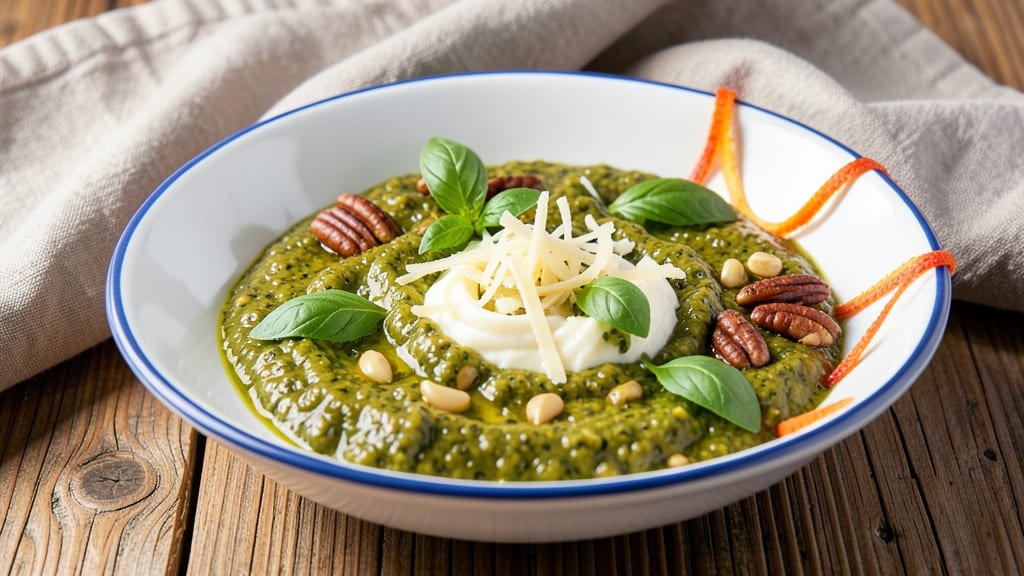
Aldi pesto sauce recipe transforms simple pantry staples into vibrant, restaurant-quality sauce in just 5 minutes. This bold basil-pine nut version delivers the same fresh, herby flavor you'd pay triple for at specialty stores—without the markup.
The secret lies in using high-quality olive oil and freshly grated Parmesan, both of which Aldi surprisingly carries at unbeatable prices.
What sets this recipe apart is its versatility and longevity. Unlike store-bought versions that separate or taste artificial, this sauce maintains its creamy texture for days when properly stored. The pine nuts add a satisfying crunch that disappears beautifully into pasta, sandwiches, or as a dip for crusty bread.
For those watching their budget, this makes a generous 1½ cups—enough for multiple meals or gifting.
Fresh basil and garlic form the aromatic base, while Parmesan cheese provides that signature umami depth. The sauce comes together in a food processor with just four ingredients (plus salt), making it perfect for weeknight cooking or meal prep.
One batch will elevate everything from linguine to grilled chicken, proving that homemade always tastes better.
Store any leftovers in an airtight container in the refrigerator for up to 5 days, or freeze for 3 months without losing quality. For extra flavor, add a splash of lemon juice before serving—this final touch brightens the sauce and balances the richness.
Ready to make pesto that rivals gourmet versions without the gourmet price?
Ingredients for aldi pesto sauce
Aldi's budget-friendly staples create this vibrant, restaurant-quality pesto with bold basil-pine nut freshness.
| Ingredient | Amount | Notes |
|---|---|---|
| Fresh Basil Leaves 🌿 | 2 cups | Packed, stems removed, vibrant green |
| Pine Nuts 🥜 | ½ cup | Toasted lightly for enhanced flavor |
| Garlic Cloves 🧄 | 3 cloves | Peeled, roughly chopped for aroma |
| Parmesan Cheese 🧀 | ¾ cup | Freshly grated from block, not pre-shredded |
| Extra-Virgin Olive Oil 🫒 | ¾ cup | High-quality, fruity variety preferred |
| Lemon Juice 🍋 | 1 tbsp | Freshly squeezed for brightness |
| Sea Salt 🧂 | ½ tsp | Fine grain preferred for balance |
| Freshly Ground Black Pepper 🌶️ | ¼ tsp | Enhances depth of flavor |
The fresh basil leaves are non-negotiable for authentic flavor—Aldi's organic selection delivers superior quality at a fraction of specialty store prices. Pine nuts should be toasted lightly in a dry pan to amplify their nutty profile; Costco's bulk section offers the best value. For Parmesan cheese, always grate it yourself from a block—Aldi's imported wedge is surprisingly high-quality for the price. Extra-virgin olive oil is the backbone of the sauce; Aldi's Italian varieties provide excellent flavor without the premium markup. When selecting garlic, choose firm cloves with tight skins to ensure maximum potency.
No pine nuts? Toasted walnuts or cashews provide a comparable texture, though with a slightly different flavor profile. Dried basil can substitute at half the quantity, though fresh is ideal. Nutritional yeast offers a vegan Parmesan alternative if needed, though the umami depth won't match real cheese. Aldi's lemon juice is perfectly balanced for this recipe, but freshly squeezed always elevates the final product. For those avoiding salt, low-sodium sea salt works well, though taste adjustments may be needed. The black pepper should be freshly ground to enhance the sauce's complexity—Aldi's pepper grinder makes this effortless.
This pesto maintains its vibrant color and creamy texture for up to 5 days when stored in an airtight container in the refrigerator. Freeze in ice cube trays for single-serving portions that retain freshness for 3 months. To prevent browning, always cover the surface with a thin layer of extra-virgin olive oil before sealing. For best results, blend the sauce just before serving—this preserves the pine nuts' satisfying crunch and basil's fresh aroma. The sauce pairs beautifully with Aldi's linguine or as a dip for their crusty bread selection.
Why You'll Love This Recipe
- Five-Ingredient Magic: I swear by this combo—just basil, pine nuts, garlic, Parmesan, and olive oil. No weird additives, no measuring headaches. Honestly, the hardest part is deciding how much to make before it’s gone.
- Garlic-Basil Bliss: That first bite? The garlic hits fresh, the basil shines bright, and the Parmesan melts into the olive oil like a warm hug. Between us, it’s the kind of sauce that makes you pause mid-chew just to savor it.
- Weeknight to Party: Slather it on pasta, toss it with roasted veggies, or drizzle it over grilled chicken—it’s my go-to for lazy nights and when company’s coming. (Yes, even on a Tuesday night.)
- Leftovers That Last: Make a double batch and stash it in the fridge. The flavors actually deepened after three days—perfect for quick lunches or last-minute dinner rescues. No sad, wilted pesto here.
Step-by-step instructions for Aldi pesto sauce
Here's how to craft vibrant, restaurant-quality pesto using simple techniques and premium ingredients.
Toast the Pine Nuts for Maximum Flavor
Place the 0.5 cup pine nuts in a dry skillet over medium-low heat. Toast them for 3-4 minutes, stirring constantly, until they turn a light golden brown and release their nutty aroma. This step is crucial—it enhances their flavor and prevents bitterness that can develop if toasted too long.
Watch carefully as they toast. You'll see them darken almost immediately, so keep your eye on the pan. Once they're golden, transfer them immediately to a small bowl to cool completely. If you let them sit in the hot pan, they'll continue cooking and may burn. The cooled nuts will blend more smoothly later.
Pulse the Basil, Garlic, and Pine Nuts
In a food processor, combine the 2 cups fresh basil leaves, 3 cloves garlic cloves, and cooled 0.5 cup pine nuts. Pulse 4-5 times until the mixture is finely chopped but not yet pasty. You want to break down the basil and garlic while preserving some texture. I like to see small flecks of green still visible—this prevents the pesto from becoming too thick.
Don't skip this step. Using a blender instead of a food processor will create a smoother but less vibrant pesto. The food processor's sharp blades create the perfect balance of texture and smoothness. Scrape down the sides of the bowl with a spatula after each pulse to ensure even processing.
Gradually Add Olive Oil and Cheese
With the food processor running, slowly drizzle in the 0.75 cup extra-virgin olive oil over 30-45 seconds. This gradual addition creates an emulsion that prevents the pesto from separating. Then add the 0.75 cup freshly grated Parmesan cheese and pulse 2-3 more times until fully combined.
The key here is patience. If you add the oil too quickly, the mixture may seize up. You'll know you've achieved the right consistency when the pesto forms a thick, spreadable paste that coats the back of a spoon. The cheese should be fully incorporated with no visible chunks remaining.
Finish with Seasonings and Adjust Consistency
Transfer the pesto to a bowl and stir in the 1 tbsp lemon juice, 0.5 tsp sea salt, and 0.25 tsp freshly ground black pepper. Taste and adjust seasoning if needed—sometimes the Parmesan needs a touch more salt, or the lemon juice requires a splash more for brightness.
For a smoother pesto, add 1-2 tablespoons of cold water while blending. For a thicker version, pulse in an additional 0.25 cup pine nuts or 0.25 cup Parmesan cheese. The sauce should be vibrant green, aromatic, and perfectly balanced between nutty, herby, and tangy flavors.
Serve or Store Immediately
Use the pesto immediately for maximum freshness, or transfer it to an airtight container. Press plastic wrap directly onto the surface to prevent oxidation. Store in the refrigerator for up to 5 days, or freeze for up to 3 months. When ready to use, give it a quick stir and thin with a little olive oil if needed.
This vibrant pesto pairs perfectly with pasta, grilled meats, or as a sandwich spread. The bright acidity from the lemon juice cuts through the richness of the cheese and nuts, creating a balanced sauce that's as versatile as it is delicious.
Pro Tips For Making Aldi Pesto Sauce
- Toast the pine nuts fast: Pulse them in short bursts—3-4 seconds at a time—while keeping the food processor lid slightly ajar. This prevents overheating and bitter flavors. (Yes, it looks like you’re giving up, but it works.)
- Use cold garlic cloves: Toss them in the freezer for 10 minutes before pulsing them with the basil. Cold garlic blends smoother and doesn’t turn the pesto into a mushy, flavorless paste. I learned this the hard way after making pesto that tasted like garlic ice cream.
- Skip the pre-grated Parmesan: Freshly grate your own—even if it’s a pain. Pre-grated cheese hides anti-caking agents that make pesto grainy and dull. A box grater takes 30 seconds and makes all the difference.
- Pulse, don’t blend: Stop the food processor before the pesto looks like soup. You want visible flecks of basil and pine nuts—this keeps texture and prevents a gluey mess. I used to over-blend and ended up with pesto that clung to my pasta like regret.
Storing and reheating this dish
Refrigerator Storage
Aldi's budget-friendly pesto stays fresh and vibrant for up to 5 days when stored properly. Transfer your sauce to an airtight container—I love using glass jars with silicone lids—and press plastic wrap directly onto the surface to prevent oxidation.
This creates a seal that keeps the basil's bright green color intact. The lemon juice helps preserve freshness, but I still recommend storing it in the coldest part of your fridge, usually the back shelf. 🌿
Freezing for Long-Term Use
For longer storage, freeze your pesto in ice cube trays for single-serving portions. Once frozen, transfer the cubes to a freezer bag with all the air squeezed out to prevent freezer burn. This method preserves texture and flavor for up to 3 months.
When ready to use, simply thaw in the refrigerator overnight or microwave for 10-15 seconds on low power. The sauce may thicken slightly after freezing—just add a splash of extra-virgin olive oil to restore its creamy consistency.
Reheating Techniques
For best results, reheat pesto gently on the stovetop. Place the desired amount in a small saucepan and warm over low heat for 2-3 minutes, stirring occasionally. Avoid high heat, which can cause the basil to turn bitter.
If the sauce seems too thick after reheating, thin it with 1-2 tablespoons of warm water or olive oil. For quick meals, microwave portions covered with a damp paper towel for 30-45 seconds on medium power, then stir well before serving.
Reviving Stale Pesto
If your pesto has lost some vibrancy after storage, don't toss it! Stir in 1 tablespoon of fresh lemon juice and 1 teaspoon of olive oil to revive its brightness. For extra freshness, blend in 1-2 tablespoons of fresh basil leaves—this works wonders to restore the herbaceous flavor.
The pine nuts' texture remains intact, so you won't lose that satisfying crunch. This trick extends the usable life of your pesto by an extra 2-3 days without sacrificing quality. ✨
Portion Control Tips
Make pesto in smaller batches if you won't use it all within 5 days. A ½-cup portion is perfect for one meal, whether you're tossing it with pasta or using it as a sandwich spread.
For meal prep, store individual portions in small glass jars—this makes it easy to grab just what you need without thawing the whole batch. Label each jar with the date to track freshness. I find that pre-portioned pesto stays fresher longer and reduces waste from forgotten leftovers.
Thawing Frozen Pesto
Thaw frozen pesto overnight in the refrigerator for the best texture. If you're in a hurry, place the frozen portion in a bowl and microwave on low power for 20-30 seconds, then stir and let it sit for 1 minute before checking consistency.
The sauce should be smooth and spreadable. If it's too thick after thawing, add ½ teaspoon of olive oil at a time until it reaches your desired consistency. Never microwave frozen pesto on high power—this can cause the basil to lose its vibrant color and develop a bitter taste. 💫
Nutrition facts
Frequently asked questions
Can I use dried basil instead of fresh?
While fresh basil gives the best flavor, you can substitute ½ cup dried basil for the 2 cups fresh called for. The texture will be slightly different, but it works in a pinch. For extra richness, add 1 extra tablespoon of olive oil to compensate for the lack of moisture. If you're using dried basil, toast it lightly in a dry pan for 30 seconds to enhance its flavor before blending.
What can I do if my pesto turns brown or separates?
Brown pesto? Stir in 1 tablespoon of fresh lemon juice and 1 teaspoon of olive oil to restore brightness. If it separates, blend again with 1-2 tablespoons of cold water until smooth. For prevention, always store pesto with a layer of olive oil on top and press plastic wrap directly onto the surface. The lemon juice helps preserve color, while the oil prevents oxidation. This trick keeps your pesto vibrant for days!
How do I make this pesto without pine nuts?
Toasted walnuts or cashews work perfectly as substitutes! Use the same 0.5 cup measurement, but toast them for 2-3 minutes until fragrant. For a budget-friendly option, try sunflower seeds—they add a different texture but still deliver nutty flavor. Just be aware that the taste will vary slightly from traditional pine nut pesto. Aldi's bulk nut section makes this an affordable alternative.
Can I make this pesto vegan?
Swap the Parmesan for ½ cup nutritional yeast and use vegan extra-virgin olive oil. For extra umami, add 1 teaspoon of white miso paste to the blend. The texture will be slightly different but still delicious. This vegan version keeps all the bright, herby flavors while being completely plant-based. The nutritional yeast gives it that signature cheesy depth without dairy.
What's the best way to use up leftover pesto?
Try these creative ideas! Spread it on toasted baguettes with roasted veggies, mix it into mashed potatoes for extra flavor, or use it as a marinade for grilled chicken or fish. For a quick snack, blend it with Greek yogurt and a pinch of salt for a refreshing dip. The possibilities are endless—this pesto adds flavor to both sweet and savory dishes when used creatively!